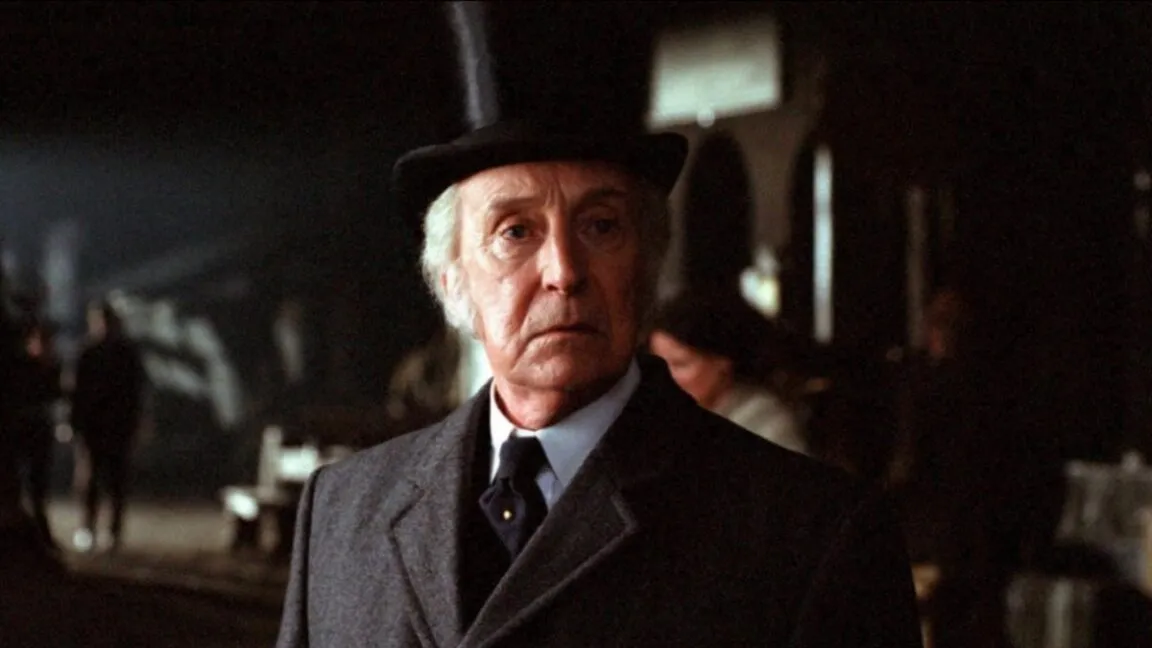
Who was Joseph Bell and how did he inspire Sherlock Holmes?
Dr. Joseph Bell was a distinguished surgeon at the University of Edinburgh whose extraordinary observational skills left a lasting impression on his student, Sir Arthur Conan Doyle. Bell possessed a near-supernatural ability to diagnose patients by observing minute physical details before they even spoke. He could identify a person's occupation, recent travels, and personal habits simply by noting a specific callous, a particular stain on clothing, or a subtle limp.
One famous example of this deductive reasoning involved Bell identifying the specific route a patient had taken to reach the infirmary by examining the type of clay stuck to their boots. This specific detail was later incorporated by Doyle into the Holmes canon, specifically in The Sign of the Four. However, as medical historian Lindsey Fitzharris notes in her book Sleuth-Hound: The Case of the Real Sherlock Holmes, Conan Doyle primarily captured the 'flashy' professional trait of Bell rather than the full breadth of his character.
The distinction between the man and the myth
While the fictional Sherlock Holmes is often portrayed as a detached, almost machine-like intellect, the real Joseph Bell was a deeply empathetic individual. He was a devoted family man who faced significant personal tragedy; after his wife died in childbirth when he was in his 30s, he raised his three children alone and never remarried. Fitzharris suggests that Doyle's portrayal was somewhat reductive, focusing on the 'parlor trick' of deduction while overlooking the emotional depth and complex personal life that defined the actual surgeon.
How did Joseph Bell contribute to the development of forensic medicine?
Joseph Bell was not merely a medical inspiration for fiction; he was a practical pioneer in the burgeoning field of forensic medicine. During the 19th century, Bell worked closely with Henry Duncan Littlejohn, a police surgeon who was an early innovator in fingerprinting and the use of courtroom photography. Together, they applied scientific rigor to criminal investigations, marking a pivotal moment when medical science began to play a formal role in the legal system.
Their partnership allowed for a more systematic approach to crime scene investigation and post-mortem analysis. By bringing clinical observation into the courtroom, Bell and Littlejohn helped transition criminal justice from reliance on eyewitness testimony to a discipline supported by physical and biological evidence. This era saw the rise of toxicology and more advanced methods of determining cause of death, which were essential for solving the high-profile murders that gripped Scotland at the time.
What were the dark realities of 19th-century forensic cases?
The rise of forensic science was often built upon the investigation of horrific social crimes, many of which targeted the most vulnerable members of Victorian society. One of the most disturbing examples discussed by Fitzharris is the 'baby farming' scandal, which highlighted the lack of legal adoption routes and birth control in the 19th century.
In these cases, impoverished women would pay 'baby farmers' to take their children, under the promise that the infants would be placed with families capable of caring for them. However, criminals like Jessie King exploited this system, taking the fees and subsequently killing the infants. Bell and Littlejohn were tasked with performing the post-mortems and providing the medical testimony required to prosecute these killers. These investigations reveal a grim truth: much of the early progress in forensic science was derived from studying the bodies of women and children who were victims of systemic poverty and violence.
The intersection of poverty and crime
The forensic breakthroughs of the era were often a response to crimes that were symptoms of deep social inequality. Because there were no formal legal frameworks for adoption, the 'baby farming' industry existed in a legal gray area that allowed predators to operate with relative impunity until medical examiners could provide the physical proof of foul play. This connection between social desperation and criminal activity provided the raw material for the development of modern investigative techniques.
What is the legacy of Lindsey Fitzharris's research into medical history?
Lindsey Fitzharris has established herself as a prominent science communicator through her deep dives into the more macabre aspects of medical history. Her work, including The Butchering Art (2017) and The Facemaker (2022), focuses on the pioneers who transformed surgical practices and helped shape modern medicine. With her latest work, Sleuth-Hound, she continues this trend by applying a historical lens to a figure widely known through popular culture.
Fitzharris's approach goes beyond simple biography; she uses historical figures to tell broader stories about human progress, suffering, and the evolution of science. Whether through her documentaries for the Smithsonian Channel or her illustrated books for children, she seeks to contextualize the 'grisly' realities of the past within the framework of scientific achievement. Her research into Joseph Bell serves to bridge the gap between the beloved myth of Sherlock Holmes and the gritty, transformative reality of 19th-century Edinburgh.
Frequently asked questions
Was Joseph Bell actually a detective?
While not a professional detective, Bell acted as a medical detective. He collaborated with police surgeons like Henry Duncan Littlejohn to solve major criminal cases in Scotland using medical expertise and observational skills that mirrored the deductive methods later popularized by Sherlock Holmes.
How much of Sherlock Holmes is based on Bell?
The core deductive reasoning of Sherlock Holmes—the ability to infer a person's history from physical clues—is directly inspired by Bell. However, the character's personality lacks the empathy and familial devotion that characterized the real-life surgeon, making Holmes a more stylized version of Bell's professional persona.
What was the role of Henry Duncan Littlejohn?
Henry Duncan Littlejohn was a police surgeon and a frequent collaborator of Joseph Bell. He was a pioneer in the use of fingerprinting and courtroom photography, helping to integrate forensic science into the Scottish legal system during the 19th century.
Why was 'baby farming' so prevalent in the 1800s?
Baby farming was driven by extreme poverty and the absence of birth control and legal adoption processes. Impoverished mothers sought out these individuals to care for their children, but the lack of regulation allowed some to commit infanticide for financial gain.
Did other famous writers recognize the Bell connection?
Yes, contemporaries noticed the resemblance. For example, the author Robert Louis Stevenson wrote to Conan Doyle, questioning if the character of Sherlock Holmes might actually be their former acquaintance, Dr. Joseph Bell.
Key takeaways
- Dr. Joseph Bell's diagnostic skills at the University of Edinburgh inspired the character of Sherlock Holmes.
- Bell was a real-world pioneer in forensic medicine, working on high-profile 19th-century criminal cases.
- The development of forensic science was often fueled by investigating crimes against vulnerable populations.
- Lindsey Fitzharris's biography Sleuth-Hound explores the complex man behind the Holmes myth.
The enduring connection between science and storytelling
The link between Joseph Bell and Sherlock Holmes illustrates how real-world scientific advancement can find permanent residence in popular mythology. While the fictional detective remains a cultural icon, the actual contributions of Bell to forensic medicine provide a more grounded, albeit darker, view of history. His work helped transition criminal investigation from guesswork to a discipline rooted in physical evidence. By examining the man behind the myth, we gain a deeper appreciation for the era of medical discovery and the complex social realities that necessitated its growth.