
Why are prediction market bets considered a national security threat?
Prediction market bets based on nonpublic information serve as actionable intelligence for adversarial nations. Defense Secretary Pete Hegseth warned in an October 20 memo that when military or intelligence professionals engage in financial transactions regarding military outcomes, they create a detectable signal. This signal is not merely a matter of individual misconduct; it is a data point that can be weaponized.
According to the Pentagon memo, hostile foreign intelligence services can aggregate and correlate these market movements to anticipate US military targets, timing, and general movements. The memo emphasizes that the lives of service members depend on the element of surprise and the secrecy of operational planning. When personnel trade on these outcomes, they inadvertently provide a roadmap for enemies to circumvent US defenses.
The mechanism of signal exploitation
The danger lies in the transparency of modern prediction markets. Unlike private betting, these platforms often show real-time shifts in probability. If a sudden, massive influx of capital occurs on a specific military outcome, an adversary monitoring that market can deduce that an event is imminent. This correlation between market volatility and real-world military activity turns financial speculation into a high-stakes intelligence leak.
What are the specific instances of insider trading in the military?
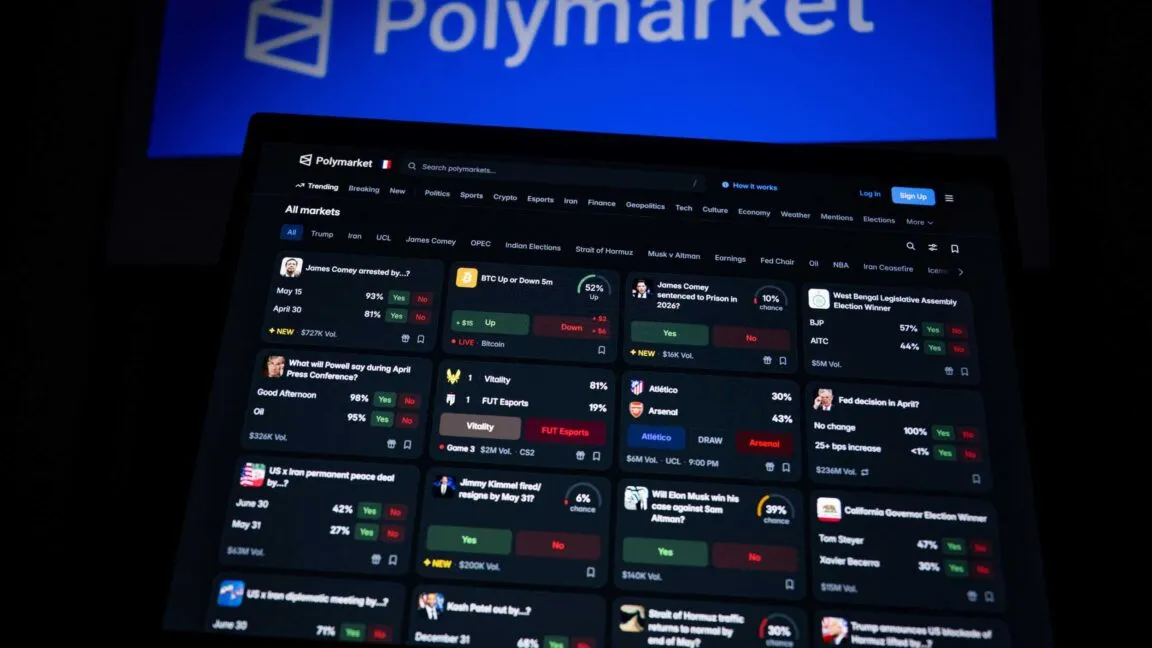
Recent enforcement actions and investigative reports highlight a growing trend of personnel attempting to profit from classified or sensitive information. One notable case involved a US Army soldier who was arrested and charged for using confidential data to secure $410,000 in bets on Polymarket. The specific wager concerned the timing of the military's efforts to capture Venezuelan President Nicolás Maduro.
Beyond individual arrests, systemic patterns of suspicious activity have been identified by watchdog groups. An August report from the Anti-Corruption Data Collective revealed the existence of 152 suspicious digital wallets. These wallets reportedly placed high-risk, "longshot" bets on various military and defense-related markets, resulting in a combined profit of $8 million. These figures suggest that the incentive for insider trading within the defense sector is substantial.
How does betting on military outcomes affect professional judgment?
The Pentagon argues that financial stakes can fundamentally warp the objectivity required for military roles. Hegseth noted that the prohibition extends beyond the immediate risk of intelligence leaks to the psychological integrity of the force. When a professional has a personal financial interest in a specific outcome, their decision-making process may become compromised.
The memo provides specific examples of how different roles might experience this cognitive bias:
- Logisticians: A logistics officer with significant funds riding on a specific strike date may feel pressure to ensure that date is met, potentially overlooking operational risks.
- Analysts: An intelligence analyst holding a position on a specific outcome may subconsciously seek out or emphasize data that supports that outcome to protect their investment.
This "warping of judgment" creates a secondary layer of risk where the internal decision-making loop of the US military becomes influenced by personal profit motives rather than strategic necessity.
What are the legal consequences for Department personnel?
Violations of the prohibition on using nonpublic information for financial gain carry severe penalties. The Pentagon memo clarifies that the ban applies to all financial platforms, including traditional betting services and specialized prediction markets like Polymarket and Kalshi. The rule covers both classified and unclassified information, as well as transactions made directly or indirectly through third parties.
Personnel found in violation face a spectrum of disciplinary measures, including:
- Administrative actions: Internal disciplinary procedures and loss of security clearances.
- Disciplinary actions: Military-specific punishments handled through the chain of command.
- Criminal prosecution: Charges brought under the Uniform Code of Military Justice (UCMJ) or applicable federal laws.
While platforms like Kalshi and Polymarket have their own internal prohibitions against insider trading, the Pentagon intends for federal and military law to serve as the primary deterrent against such conduct.
How has the White House responded to suspicious market activity?
The concerns regarding prediction market bets are not limited to the Department of Defense; the White House has also issued warnings following high-profile incidents. The Associated Press reported that a group of new accounts on Polymarket made highly specific, well-timed bets regarding a ceasefire between the US and Iran. These bets were placed just before President Donald Trump announced the ceasefire in April, yielding hundreds of thousands of dollars in profit for the account holders.
The administration's response has been swift in the wake of such reports. On the same day the Iran ceasefire betting report was released, the White House issued a formal warning to staff against utilizing private information to trade on these platforms. This follows other reported incidents, such as a White House teleprompter aide who reportedly earned $100,000 on Kalshi by betting on the specific content of the President's prepared remarks.
What is the current regulatory status of prediction markets?
The regulatory environment for prediction markets is currently a subject of intense legal and political debate. Under the current administration, these markets have flourished due to a relatively light-touch approach to regulation. However, a jurisdictional conflict is emerging between federal and state authorities.
The federal government has argued that state-level attempts to regulate these markets are preempted by the exclusive jurisdiction of the Commodity Futures Trading Commission (CFTC). Conversely, several state governments are seeking to impose their own restrictions, treating these markets as forms of gambling. The legal resolution of this conflict is expected to reach the Supreme Court, as states fight to uphold their right to regulate such activities within their borders.
Frequently asked questions
What platforms are included in the Pentagon's warning?
The prohibition applies to all financial platforms used for betting. This includes traditional gambling services as well as specialized prediction markets such as Polymarket and Kalshi. The memo emphasizes that the medium does not matter; the use of nonpublic information for any financial transaction is forbidden.
Does the rule apply to unclassified information?
Yes, the restriction is not limited to classified intelligence. Hegseth's memo states that Department personnel may not use any nonpublic information to inform financial transactions, regardless of whether that information is officially classified or merely unclassified but sensitive to operations.
Can a third party make bets on my behalf?
No, the memo explicitly prohibits engaging in financial transactions using nonpublic information either directly or indirectly through a third party. This is intended to prevent personnel from circumventing the rules by using friends, family, or proxies to execute trades based on their insider knowledge.
What is the difference between a prediction market and traditional betting?
While both involve wagering on outcomes, prediction markets often focus on real-world events, such as political elections or military actions, using sophisticated financial structures. The Pentagon's concern is that the transparency and liquidity of these specific markets make them more susceptible to being used as intelligence signals.
What happens if a service member violates these rules?
Violations can lead to severe consequences including administrative discipline, military disciplinary action, and criminal prosecution. Depending on the severity of the breach, personnel may face charges under the Uniform Code of Military Justice (UCMJ) or federal law.
Key takeaways
- Pentagon memo warns that prediction market bets create intelligence signals for enemies.
- Unauthorized betting on military outcomes can lead to criminal charges under the UCMJ.
- Suspicious wallets have reportedly won $8 million on defense-related markets.
- The ban covers both classified and unclassified nonpublic information.
- Financial interests in outcomes can warp the judgment of military analysts and logisticians.
Conclusion
The intersection of high-stakes financial speculation and national security presents a novel challenge for the Department of Defense. As prediction markets grow in popularity and liquidity, the risk of