Bridging the gap between AI autonomy and security
The rise of agentic AI has introduced a significant friction point in digital workflows: the login barrier. As consumers increasingly rely on autonomous AI to manage complex tasks such as booking travel or handling online shopping, the requirement for manual sign-ins often disrupts the seamless experience these tools promise. Currently, when an AI agent encounters a login page, the human user must intervene, which essentially defeats the purpose of delegating the task to an autonomous system.
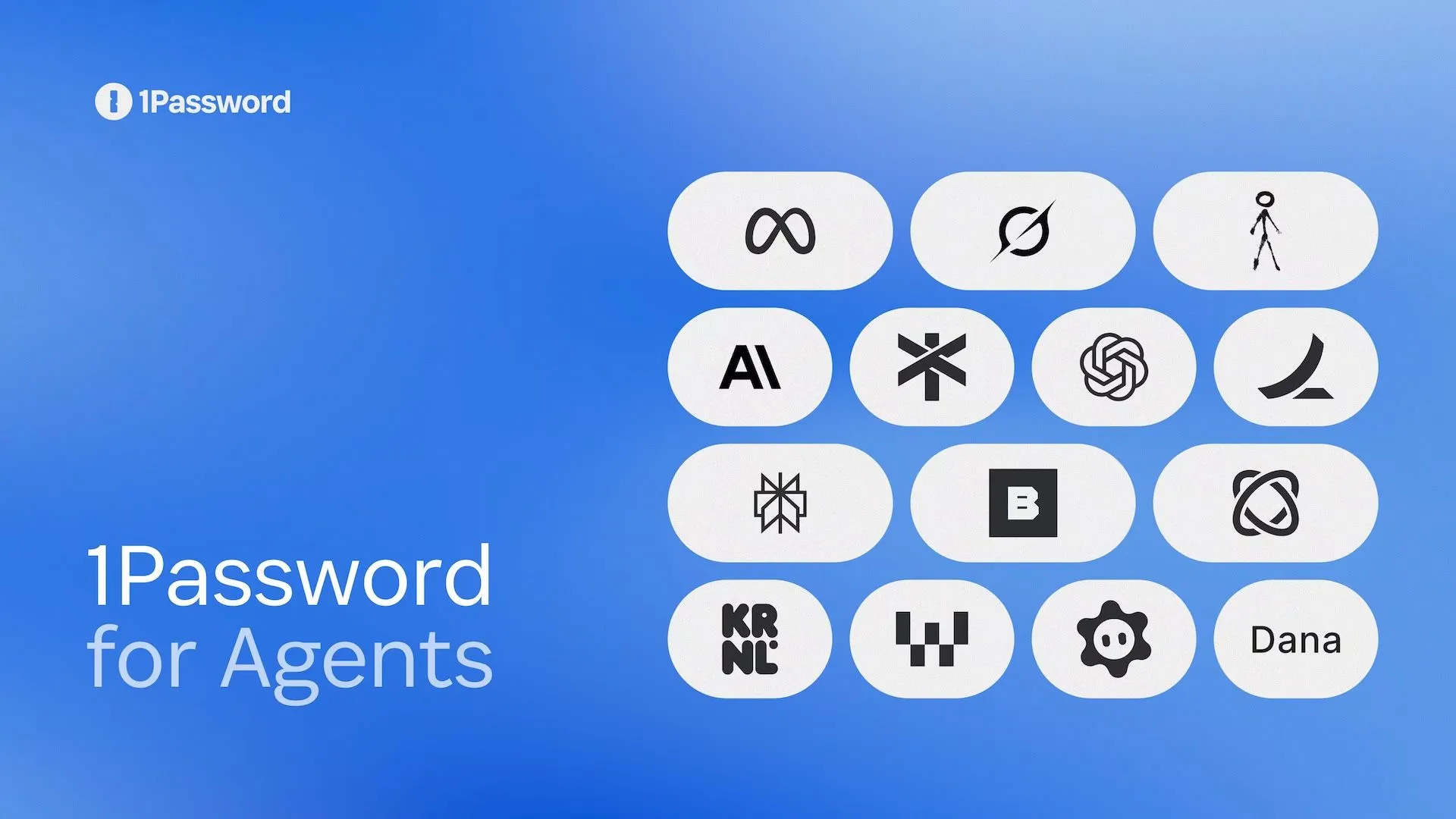
To solve this, 1Password is introducing a specialized platform known as 1Password for Agents. This system acts as a sophisticated security layer positioned between the user's accounts and the AI agents themselves. The goal is to facilitate a continuous workflow where the agent can navigate authenticated environments without requiring constant human manual input, while maintaining a strict perimeter around sensitive data.
This shift comes at a critical time. As more users move toward autonomous agents, the potential for unauthorized access grows. While financial institutions remain concerned about how AI might access customer accounts, 1Password's strategy focuses on controlled, permission-based access that removes the human from the repetitive task of typing credentials without removing the human from the loop of ultimate authority.
How 1Password for Agents protects credentials
The core innovation of the 1Password AI agent integration lies in its ability to facilitate logins without ever transmitting plaintext passwords or one-time codes to the AI. Instead of handing over the "keys to the kingdom," the system utilizes a unique digital key to identify the agent to the 1Password vault.
The authentication process follows a specific security protocol:
- Identification: The AI agent identifies itself to the 1Password platform using a unique digital signature or key.
- Authorization: The user receives a prompt on a trusted, physical device to approve the specific login request.
- Background Execution: Once approved, the password sharing is handled securely in the background by the 1Password infrastructure.
- Credential Isolation: The AI agent completes the login process without ever actually seeing or storing the actual password.
This architecture addresses the primary fear regarding "rogue" AI usage. Even if an AI agent were compromised, it would not possess the user's actual credentials, as those are never shared with the agent's environment. According to 1Password Chief Product Officer Aashish Tripathi, the philosophy is that an agent should be able to complete its assigned task without gaining permanent or unrestricted access to everything stored within the account.
Strategic partnerships and rollout schedule
1Password is not building this ecosystem in isolation; it is actively collaborating with major leaders in the artificial intelligence sector to ensure deep, seamless integration. The company is currently working with industry giants such as OpenAI, Anthropic, and Meta to refine how these agents interact with password management systems.
The rollout of these capabilities is already underway, with specific agents being prioritized for early access. Grok Bot and Meta Muse are among the first to receive the integration in the coming days. Other prominent tools are slated for future release, including ChatGPT Work, Dots, and Claude Duet.
For existing users, the availability of this upgrade depends on their specific hosting and plan type. Individual and Family plan subscribers who use 1Password.com hosting will receive the upgrade at no additional cost. However, users on 1Password.eu or 1Password.ca hosted plans are currently excluded from the free upgrade, marking a distinction in how the service is being deployed across different regional infrastructures.
FAQ
Will the AI agent see my actual password?
No, the AI agent will never see your plaintext password or one-time codes. The 1Password for Agents platform acts as a secure intermediary, using unique digital keys to facilitate the login process in the background, ensuring that sensitive credentials remain isolated from the AI's memory and processing.
Do I still need to approve every login?
Yes, the user maintains ultimate control over the process. While the agent handles the technical aspects of the login, the user must still provide authorization via a prompt on a trusted, personal device. This ensures that no autonomous agent can access an account without explicit human consent.
Is this upgrade free for all users?
The availability of the upgrade depends on your specific plan and hosting. Individual and Family customers who are hosted on 1Password.com will receive the upgrade for free. However, users currently using 1Password.eu or 1Password.ca hosting are not eligible for the free upgrade at this time.
The future of autonomous digital identity
The introduction of 1Password for Agents represents a pivotal moment in the evolution of digital identity. As AI transitions from simple chatbots to autonomous agents capable of executing real-world transactions, the traditional method of password sharing becomes an untenable security risk. By decoupling the ability to log in from the knowledge of the password itself, 1Password is establishing a new standard for agentic security. This approach allows for the high-level automation required by modern consumers while upholding the fundamental principle of least privilege, ensuring that AI agents remain tools of convenience rather than liabilities for personal data security.