
How did the 71,207 drones break world record benchmarks?
The record-breaking feat was achieved by launching a total of 71,207 drones within a single week in a remote Texas location. This volume significantly exceeded the previous weekly record of 55,939 launches, which had been established in 2026 by the companies Aerial Illuminations and UVify. The margin of victory was substantial, with the new total surpassing the previous mark by 15,268 drone launches.
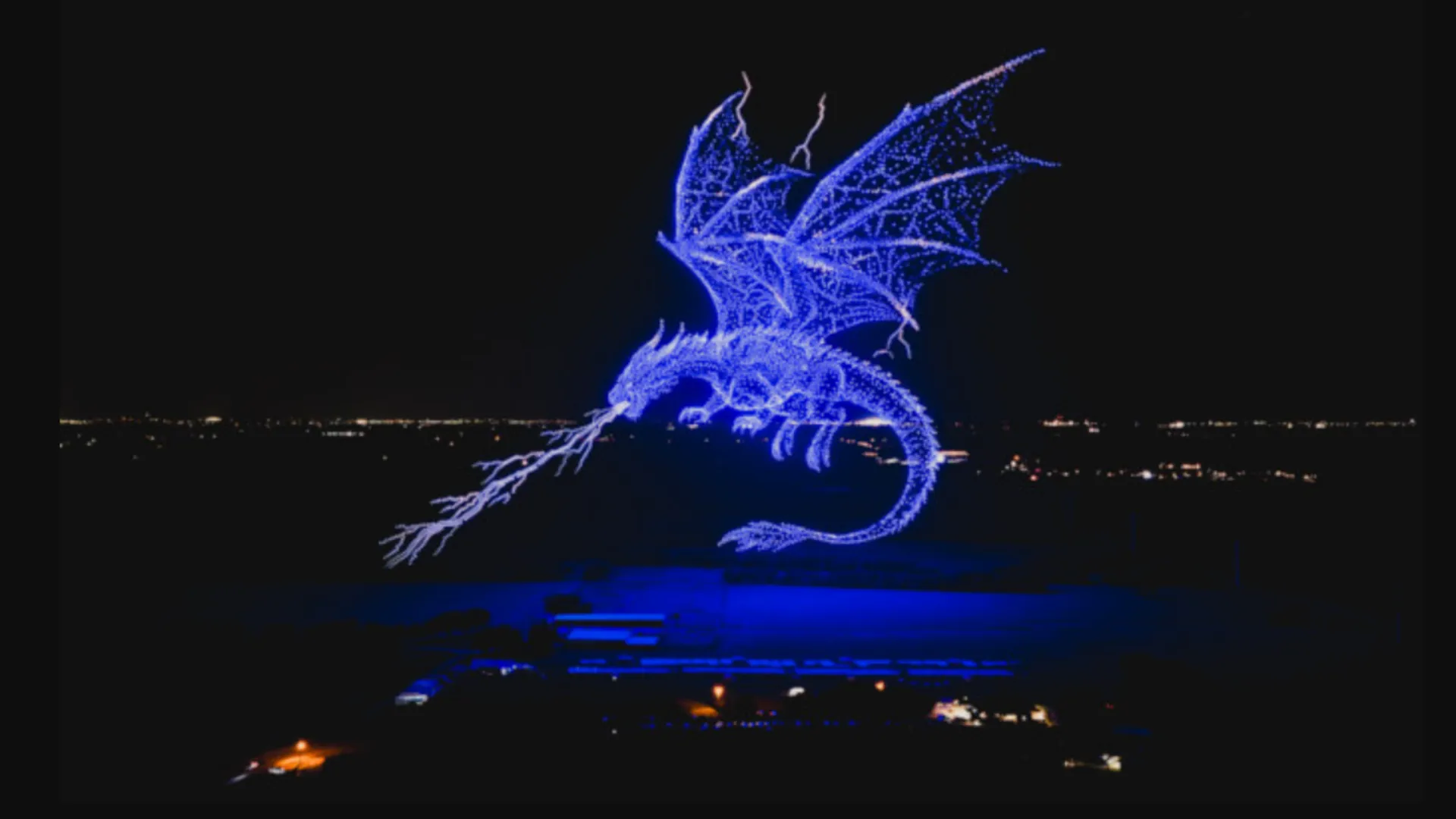
The week-long event was not merely about volume but also about the complexity of the formations created. Beyond the weekly total, the teams secured a specific record for the largest mythical creature depicted by multirotors. On September 28, 2026, a specialized formation of 10,183 drones successfully created the image of a glowing electric blue dragon. This specific display broke the previous record of 2,247 drones that had been set at the end of 2025 by an Emirati tourism authority.
What role did Damoda's hardware play in the operation?
Damoda provided the essential hardware and specialized technical expertise required to manage a fleet of this magnitude. Based in Shenzhen, Damoda engineers traveled to Texas to work alongside American operators from Sky Elements. Their primary contribution was a specialized 'drone-in-a-box' concept that differs significantly from traditional manual drone deployment methods.
The evolution of drone deployment and charging
In standard drone light shows, crews typically must place each individual aircraft by hand into its flight position. This process is labor-intensive and increases the margin for human error during rapid-fire launches. Damoda's system utilizes dedicated charging launch trays that automate much of the logistical burden.
Under this system, each aircraft is stored and charged within a specific tray. When it is time for flight, the drone departs from its dedicated tray and is programmed to return to that exact same unit after landing. This method offers several operational advantages:
- Simplified Transport: The trays serve as both storage and deployment units, making it easier to move large fleets to remote sites.
- Efficient Warehousing: Because each drone has a dedicated home, tracking and organizing the fleet is streamlined.
- Automated Charging: The trays ensure that drones are replenished with power immediately upon return, preparing them for the next scheduled flight.
This automation was critical for the Texas operation, as the crews were tasked with managing a fleet exceeding 10,000 aircraft that needed to fly several times every day.
What were the logistical challenges faced during the Texas event?
The scale of the operation required the entire fleet to be managed from a single site at a remote farm to minimize residential disruption. Managing approximately 10,200 drones per performance, with multiple shows scheduled daily, created an intense workload for the technical crews. The high frequency of launches meant that any hardware or software fault could potentially disrupt the entire sequence.
Weather conditions added an extra layer of difficulty to the week-long attempt. Following the opening show on September 27, a thunderstorm struck the area. Despite the meteorological interference, the teams managed to continue their schedule, successfully completing the remaining performances through the final night on September 30. Michael Empric, the Guinness World Records adjudicator, noted that the scale of 10,000 drones flying multiple times a day, combined with the weather, made this one of the most challenging attempts he had ever adjudicated.
What other records have been set by Sky Elements?
Sky Elements has established itself as a leader in the drone light show industry, holding multiple existing titles. Their portfolio of records includes creative and complex imagery that demonstrates the versatility of unmanned aerial vehicles (UAVs).
| Record Type / Image | Number of Drones |
|---|---|
| Gingerbread village | 4,981 |
| Fictional figure | 4,979 |
| Cowboy hat | 519 |
| Longest animation | 30 minutes |
The Texas achievement represents a significant leap in scale compared to these previous milestones, moving from formations of roughly 5,000 drones to a weekly operational volume exceeding 70,000 launches.
Frequently asked questions
How many drones were used to create the blue dragon?
A total of 10,183 drones were used to form the electric blue dragon. This specific formation broke the previous record for the largest mythical creature depicted by multirotors, which had been held by an Emirati tourism authority with a 2,247-drone display.
Who were the main partners in this record attempt?
The record was a joint effort between Sky Elements, an American drone show company, and Damoda, a Shenzhen-based manufacturer. Damoda provided the specialized launch trays and engineering expertise, while Sky Elements managed the flight operations and deployment in Texas.
What is the 'drone-in-a-box' concept mentioned in the report?
The 'drone-in-a-box' concept refers to Damoda's specialized launch and charging trays. Unlike manual setups where drones are placed by hand, these trays store, charge, and receive each aircraft, allowing for more efficient transport and automated return-to-base procedures.
Did weather affect the successful completion of the shows?
Yes, a thunderstorm occurred after the first show on September 27. However, the teams were able to persevere, and the performances continued as planned through the closing night on September 30, ultimately resulting in five successful shows on the final night.
What was the previous weekly launch record?
The previous record for the most drone launches in one week was 55,939. This mark was set earlier in 2026 by the companies Aerial Illuminations and UVify, before being surpassed by the Sky Elements and Damoda team.
Key takeaways
- Sky Elements and Damoda launched 71,207 drones in one week, setting a new Guinness World Record.
- A 10,183-drone formation created a blue dragon, breaking the mythical creature record.
- Damoda's charging trays automated the deployment and return process for the 10,000+ drone fleet.
- The operation overcame weather challenges, including a thunderstorm, to complete all scheduled shows.
The future of large-scale drone choreography
The successful execution of the Texas record attempt signals a shift in the capabilities of drone light shows. By moving away from manual deployment toward automated, tray-based systems like those provided by Damoda, companies can manage much larger fleets with higher frequency. The ability to coordinate over 10,000 aircraft in complex, mythical formations demonstrates that the technical limits of multirotor choreography are rapidly expanding. As hardware becomes more integrated with automated logistics, the scale and complexity of these aerial spectacles are likely to continue increasing, paving the way for even more ambitious global displays.