
How did Bedrock Robotics secure $600 million in funding?
Bedrock Robotics raised $600 million in a Series C round that establishes a $4.1 billion valuation for the two-year-old startup. The round was co-led by CapitalG and Emergence Capital, marking a significant milestone in the company's rapid financial ascent since its inception in 2024. According to the company, it has now raised nearly $1 billion in total capital since its founding.
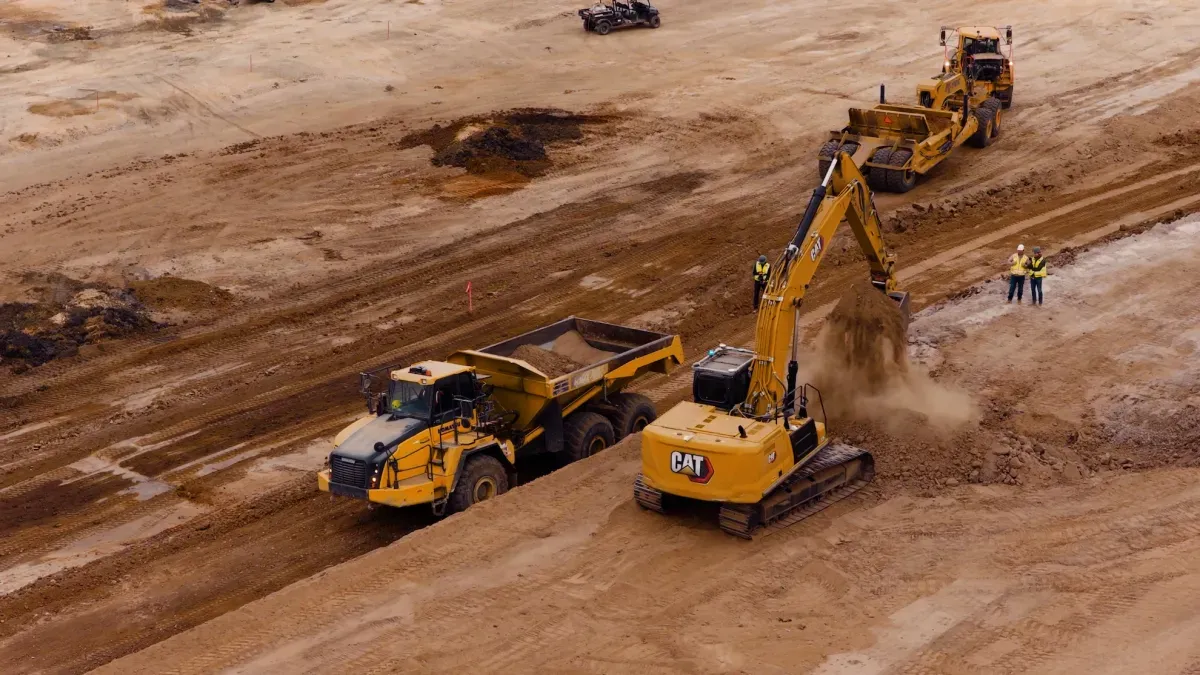
The funding comes at a strategic turning point for the firm. Only two months prior to this announcement, Bedrock Robotics successfully moved its autonomous excavators beyond the testing and pilot phase, deploying them into active, real-world construction environments. The fresh capital is earmarked for accelerating this commercial transition, expanding field support infrastructure, and growing the teams necessary to serve a widening customer base.
Key investment participants
The Series C round saw participation from a diverse group of institutional investors. New contributors to the company's capital include the US Innovative Technology Fund (USIT), Bessemer Venture Partners, and Temasek. These new backers join a robust list of existing investors that includes Nvidia, 8VC, Georgian, Valor Equity Partners, Xora, Eclipse, and Perry Creek Capital. This broad support highlights the high level of investor confidence in the scalability of autonomous construction technology.
What technology is Bedrock Robotics deploying on job sites?
Bedrock Robotics utilizes a specialized self-driving kit designed to be retrofitted onto existing construction and worksite vehicles. Rather than requiring contractors to purchase entirely new fleets of robotic machinery, the company's technology allows for the automation of current excavator assets. This approach lowers the barrier to entry for construction firms looking to integrate autonomous capabilities into their existing workflows.
The company has already demonstrated the efficacy of this technology through several high-profile commercial operations. Currently, Bedrock-equipped excavators are performing work at a water treatment facility in Nevada and an earthwork site managed by Champion Site Prep in Texas. Additionally, the technology is being utilized in a massive 1.2 million-cubic-yard civil sitework project overseen by Zachry Construction Corporation.
Why is autonomous technology targeting the construction sector?
The primary driver for Bedrock Robotics' focus on autonomous excavators is the critical shortage of skilled heavy machinery operators within the construction industry. Mastering the operation of an excavator is a high-skill task that, according to Bedrock, typically requires five years or more of experience. As the complexity of projects increases, the difficulty in finding qualified personnel becomes a significant bottleneck for project timelines and costs.
This labor gap is being exacerbated by a demographic shift in the workforce. The Associated Builders and Contractors, a national trade association, estimates that more than 40% of the current construction workforce is approaching retirement age and will exit the industry within the next five years. Bedrock Robotics is positioning its autonomous solutions as a vital tool to bridge this impending labor deficit.
Expanding industry partnerships
To address these challenges, Bedrock is aggressively expanding its partnership network. A recent agreement with Haydon, an Arizona-based general contractor, will see Bedrock-equipped machines deployed across a variety of complex sectors. These include:
- Advanced manufacturing facilities
- Water and wastewater treatment plants
- Data center construction
- Healthcare facility development
By targeting these high-stakes environments, Bedrock aims to prove that autonomous machinery can function as a dependable, integral part of modern construction crews.
Who is leading the Bedrock Robotics team?
The company is led by a group of industry veterans with extensive backgrounds in autonomous driving and robotics. Co-founder and CEO Boris Sofman brings significant expertise from the self-driving sector, having previously led the now-defunct self-driving trucks program at Waymo. Sofman also co-founded Anki Robotics, the company behind the Cozmo consumer robot, which operated until 2019.
The founding team is bolstered by other former Waymo employees, including Chief Technology Officer Kevin Peterson and Vice President of Engineering and Infrastructure Ajay Gummalla. Additionally, Tom Eliaz, a former employee of Segment and Twilio, serves as VP of Engineering and Hardware. To support its scaling commercial operations, the company has also made two key executive hires: Amy Jones Satrom, a veteran of Amazon, Nuro, and Uber, as VP of Operations, and Lando Juarez, formerly of Uber's autonomous mobility business, as General Counsel.
Frequently asked questions
What does Bedrock Robotics' technology actually do?
Bedrock Robotics provides a self-driving kit that can be retrofitted onto existing construction vehicles, specifically excavators. This allows companies to automate their current machinery, enabling autonomous operation on active job sites without the need to replace their entire existing fleet of heavy equipment.
How much money has the company raised in total?
Since its founding in 2024, Bedrock Robotics has raised nearly $1 billion. The most recent Series C round contributed $600 million to this total, significantly boosting the company's valuation to $4.1 billion and providing the capital needed for commercial scaling.
Why is there a shortage of excavator operators?
The shortage is driven by two main factors: the high skill requirement and an aging workforce. It takes approximately five years to master an excavator, and according to the Associated Builders and Contractors, over 40% of construction workers are set to retire in the next five years.
Where are Bedrock's machines currently working?
Bedrock's autonomous excavators are currently in commercial operation at several locations, including a Nevada water treatment facility, a Champion Site Prep earthwork site in Texas, and a large-scale civil project involving 1.2 million cubic yards of work with Zachry Construction Corporation.
Who are the main investors in Bedrock Robotics?
The Series C round was co-led by CapitalG and Emergence Capital. Other notable participants include Nvidia, Bessemer Venture Partners, Temasek, and the US Innovative Technology Fund (USIT), alongside several existing investors like 8VC and Georgian.
Key takeaways
- Bedrock Robotics raised $600 million in Series C funding, reaching a $4.1 billion valuation.
- The company provides retrofit kits to enable autonomous operation on existing construction excavators.
- A critical shortage of skilled operators and a 40% retirement rate drive demand for automation.
- The startup has raised nearly $1 billion since its establishment in 2024.
The future of construction automation
Bedrock Robotics' rapid growth and significant capital infusion signal a major shift in how the construction industry views automation. By addressing the specific pain points of labor shortages and operator training through retrofit technology, the company is moving beyond the experimental phase into essential infrastructure support. As the company expands its footprint into data centers, manufacturing, and water treatment, the integration of autonomous heavy machinery appears increasingly likely to become a standard component of the global construction workflow.




