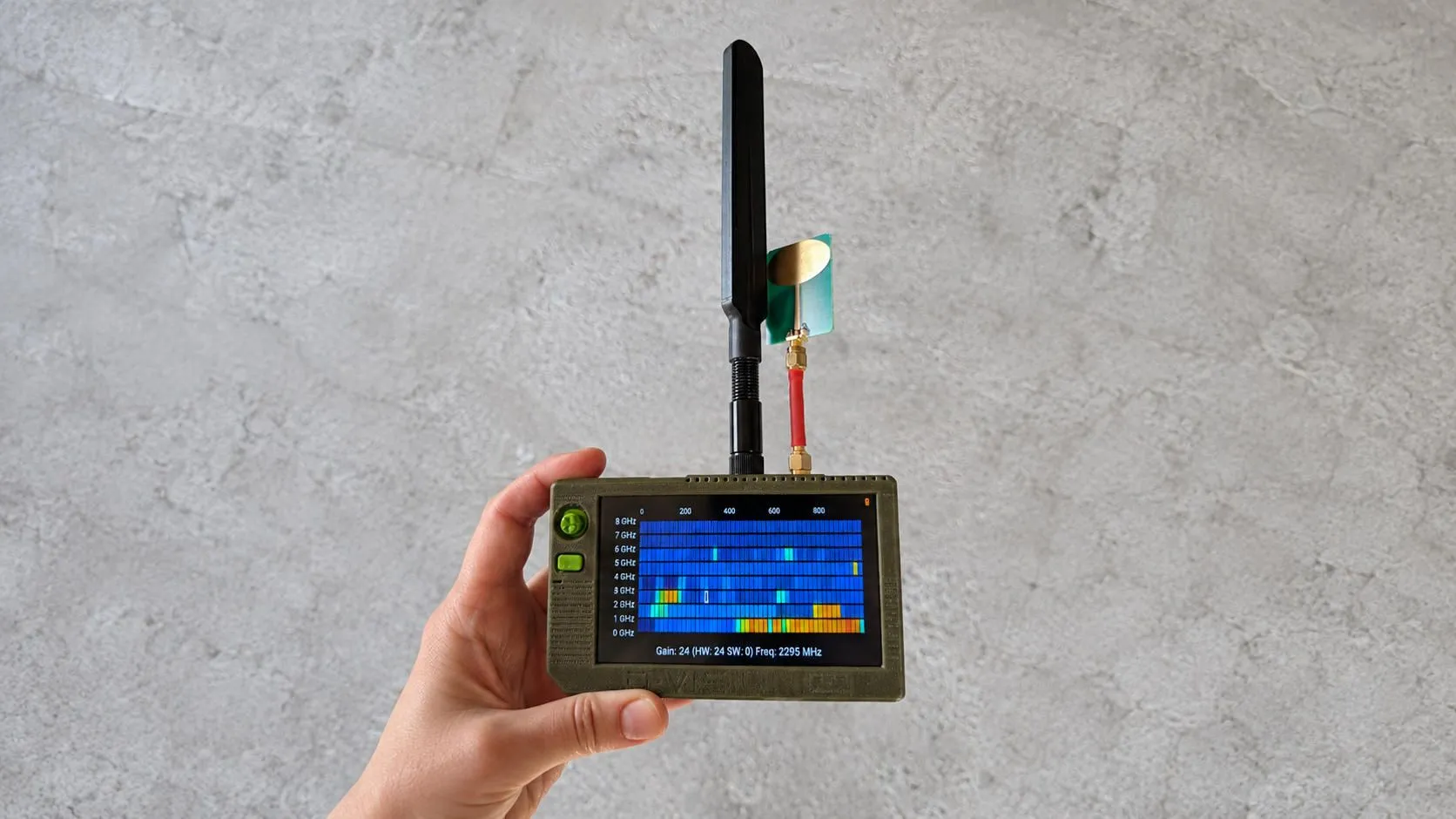
How does the D·Vision SDR drone detector work?
The D·Vision SDR drone detector operates by utilizing software-defined radio (SDR) technology to intercept and process radio frequency signals. While most standard frontline detectors rely on fixed analog receivers tuned to specific, narrow bands, the D·Vision SDR digitizes wide slices of the radio spectrum. This allows the hardware to process signals through software, enabling it to identify and decode the specific signatures used by Russian drones for both control and video transmission.
According to reports from DOU and UNITED24 Media, the device sweeps a massive frequency range from 500 to 8,700 MHz. This broad coverage is designed to eliminate blind spots that occur when drones shift their operating frequencies to evade detection. By converting intercepted radio waves into a digital format, the device can do more than just alert soldiers to a nearby threat; it can actually lock onto the drone's own video link. This provides the operator with a live view of exactly what the enemy aircraft is filming in real time.
The shift from analog to digital detection
The transition from analog to software-defined radio represents a fundamental change in electronic warfare. Traditional analog receivers are hardware-dependent, meaning that if an adversary changes their frequency, the receiver often becomes useless until new physical components are integrated. In contrast, an SDR-based platform like the D·Vision SDR can be reconfigured through code. This means the device can be 're-taught' to recognize new signal types or frequencies without the need for a hardware overhaul, providing a level of agility that is critical in a rapidly evolving combat environment.
Why is software-defined radio critical for modern electronic warfare?
Software-defined radio is essential because it allows for rapid adaptation to shifting enemy tactics and communication protocols. In the context of the conflict in Ukraine, drone control schemes and telemetry frequencies are known to change on a near-weekly basis. A detector that relies on static hardware cannot keep pace with these changes, leading to rapid obsolescence. An SDR-based system, however, can absorb these changes through firmware updates, ensuring the tool remains effective even as the threat evolves.
The adaptability of SDR is well-documented in technical literature. A 2022 survey published in the journal Sensors noted that radio-frequency detection built on SDR platforms is among the most adaptable methods for spotting small drones. This is precisely because the signal processing logic can be rewritten to match the specific characteristics of new or modified threats. For CODE380, this flexibility is a core part of their operational model, allowing them to respond to the technical shifts of the battlefield in real time.
What impact does video interception have on battlefield survival?
Intercepting enemy video feeds provides Ukrainian soldiers with a decisive tactical advantage by removing the guesswork from drone encounters. When a detector can decode a live video link, ground troops gain the same visual perspective as the enemy operator. This allows them to see exactly what the drone is targeting, which is vital for making split-second decisions regarding survival and response.
This visual intelligence enables several critical tactical responses:
- Target Assessment: Soldiers can determine if they are the primary target or if the drone is simply conducting reconnaissance.
- Evasive Maneuvers: If a target is confirmed, troops can decide whether to scatter or take immediate cover.
- Electronic Countermeasures: Knowing a drone is actively filming allows units to decide when to activate jammers or when to remain silent to avoid detection.
As Russian drones increasingly feature high-quality cameras and are piloted by human operators rather than following preset paths, the ability to see what they see has become a vital component of situational awareness.
How are acoustic sensors being integrated into Ukrainian drones?
Ukrainian engineers are also expanding the sensory capabilities of drones by integrating microphones to enable passive acoustic detection. Ptashka Drones has recently equipped its fiber-optic FPV drones with microphones, allowing them to 'hear' enemy movements from significant distances without emitting signals that could give away their own position. These drones are often referred to by Ukrainian crews as "zhdun" (waiter) drones because they can land near expected routes and wait silently for targets to enter their range.
The acoustic capabilities of these drones provide varying levels of detection range based on the target type. According to manufacturer figures from Ptashka Drones, the microphones can achieve the following:
| Target Type | Detection Range (Approximate) |
|---|---|
| Human conversation | 20 to 30 meters |
| Light vehicles | 50 to 100 meters |
| Heavy vehicles | Up to 200 meters |
Beyond offensive use, these microphones serve as a passive early warning system. An operator can listen for the approach of enemy attack drones, providing precious seconds to relocate to a safer position before a strike occurs.
How quickly are these technologies being updated?
The speed of the development cycle is perhaps the most critical factor in the success of these new technologies. For the D·Vision SDR, the Kyiv-based company CODE380 maintains a rapid update cadence, shipping software updates approximately twice a month. This frequency is a direct response to the feedback received from Ukrainian military personnel during combat field testing. Because the technical landscape of drone warfare changes almost every week, a slow development cycle would render the equipment obsolete before it even reaches the front lines.
This iterative approach—where combat feedback is immediately translated into code and pushed back to the field—is a hallmark of the current technological race. Both the D·Vision SDR and the acoustic-equipped Ptashka drones represent a bet on adaptability. In a conflict where electronic and tactical signatures are constantly being modified, the ability to update a device's 'senses' through software or simple hardware additions like microphones is often more valuable than the initial specifications of the device itself.
Frequently asked questions
What is the main difference between D·Vision SDR and traditional drone detectors?
The primary difference lies in the use of software-defined radio (SDR) instead of fixed analog receivers. While traditional detectors are limited to specific frequency bands, the D·Vision SDR can be reprogrammed via software to scan a wide range (500 to 8,700 MHz) and even decode live video feeds.
How does the D·Vision SDR improve soldier safety?
It improves safety by providing real-time visual intelligence. By intercepting the drone's video link, soldiers can see exactly what the enemy sees. This allows them to judge if they are being targeted and decide whether to take cover, scatter, or use electronic jammers.
What are "zhdun" drones?
"Zhdun" (meaning "waiter") drones are Ukrainian FPV drones, such as those produced by Ptashka Drones, that use passive sensors like microphones to wait for targets. They land near expected enemy routes and listen for the sound of approaching soldiers or vehicles to strike effectively.
How far can Ptashka Drones' microphones detect targets?
The detection range varies by target: microphones can pick up loud human conversations at 20 to 30 meters, light vehicles at 50 to 100 meters, and heavy vehicles at distances of up to 200 meters.
Why is the frequency of software updates so important?
Software updates are critical because drone frequencies and control methods change almost weekly in Ukraine. Rapid updates, such as the twice-monthly cycle used by CODE380, ensure that detectors can adapt to new enemy electronic signatures without requiring new hardware.
Key takeaways
- The D·Vision SDR uses software-defined radio to scan frequencies from 500 to 8,700 MHz.
- CODE380's detector can intercept and display live video feeds from enemy drones.
- Ptashka Drones' FPV drones use microphones to detect vehicles up to 200 meters away.
- Rapid software updates (roughly twice a month) are vital to counter evolving drone frequencies.
Conclusion
The introduction of the D·Vision SDR and acoustic-equipped "waiter" drones marks a significant evolution in the electronic and sensory warfare being conducted in Ukraine. By moving away from rigid analog hardware toward adaptable, software-driven platforms, Ukrainian engineers are attempting to outpace the rapid technical shifts of the battlefield. While the effectiveness of these tools depends on the continuous cycle of software updates and field feedback, they provide a crucial edge in situational awareness. Ultimately, the ability to see and hear the enemy before they strike remains the most vital component of survival in modern drone-centric combat.