
How are highway thieves spoofing GPS and targeting cargo?
Thieves are using digital manipulation to bypass traditional security measures, most notably by spoofing GPS coordinates to hide the movement of stolen goods. In one significant incident involving a $10 million shipment of server rack components, the cargo was being monitored by a tracking application, yet the thieves successfully obscured its location by feeding the system false coordinates. This ability to disrupt digital monitoring allows criminals to move high-value assets without immediate detection by logistics managers or law enforcement.
Beyond GPS manipulation, the methodology of these thefts has shifted from opportunistic roadside robberies to highly coordinated digital operations. According to NBC News, criminals are infiltrating email accounts and freight broker websites to identify lucrative loads. Once they gain access, they employ several sophisticated maneuvers:
- Account Hijacking: Hackers post fake shipments on listing websites to lure legitimate trucking companies. Once a company responds, the thieves send malicious links to install software that grants them control over the trucking company's accounts.
- Identity Fraud: Criminals use AI-generated fake driver’s licenses to embed accomplices into the logistics chain as legitimate-looking drivers.
- Misdirection: By gaining control of brokerage accounts, thieves can reroute shipments or bid on real loads to facilitate the theft.
What equipment is being targeted by these criminal networks?
The primary targets are components essential to the rapidly expanding AI and data center industries, which investigators describe as being as lucrative as "stealing pure gold bars." Because these items are compact yet extremely high in value, they are ideal for high-speed theft and resale on gray markets.
Commonly stolen items include:
- High-end servers and computer memory chips.
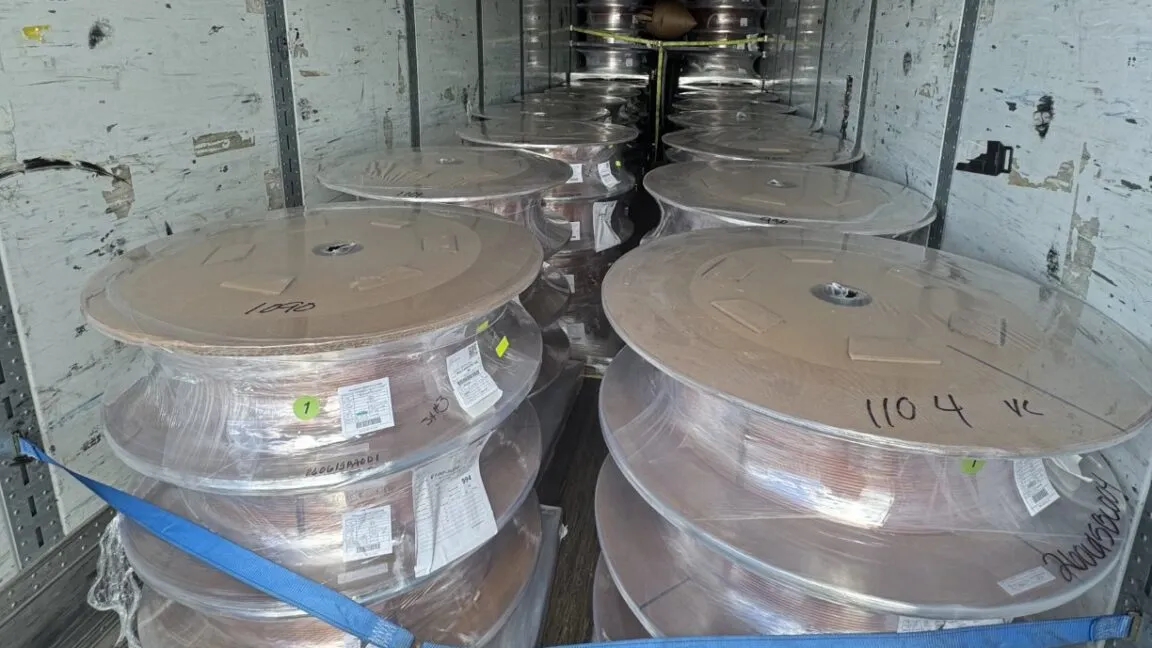
- Fiber-optic cables and copper wire spools.
- Bitcoin mining machines and specialized power solutions.
- Data center cooling equipment.
The impact of these thefts extends beyond the tech sector. In a Los Angeles County Sheriff’s Department case, investigators recovered data center cooling equipment destined for Deepcool AI that had been mixed in with a shipment of consumer goods, including televisions, shoes, and cosmetics. This suggests that the theft of high-tech components can disrupt broader retail supply chains as well.
The high value of data center components
The financial scale of these thefts is massive. For instance, the Cook County Sheriff’s Office reported recovering $300,000 in copper wire and approximately $1 million in custom-made modular power solutions. Such high-value targets make the logistics of data center infrastructure a primary objective for organized crime.
Why are security escorts facing increased physical danger?
While many thefts are executed through digital deception, some have escalated into violent physical confrontations. Criminals have begun targeting the off-duty police officers hired to protect high-value shipments, using vehicles to force security details off the road.
In a notable theft involving $13 million worth of computer server equipment destined for Georgia, two off-duty officers lost sight of the trailer after an unmarked sedan intentionally struck their vehicle. This tactic allowed the thieves to intercept the trailer while the escorts were incapacitated. A similar incident occurred during a California-to-Texas shipment where an SUV struck the security escort's vehicle, allowing the thieves to escape with $10 million in server rack components.
Gerardo Pachuca, a private investigator and former LASD officer, noted to NBC News that these incidents are often calculated rather than accidental. The goal is to remove the human element of security to ensure the cargo can be moved without interference. This shift toward violence marks a dangerous evolution in cargo crime, moving from digital fraud to physical assault.
Where does the stolen equipment go?
Unlike many stolen goods that appear on public online marketplaces, data center equipment often disappears into specialized gray markets. Because the technology is highly specific, thieves typically have a buyer lined up before the theft even occurs.
Investigators suggest that stolen components are often broken down into individual parts. These parts are then sold to tech firms that seek to lower their operational costs by purchasing questionably sourced hardware. There is a significant demand for these components in regions where access to high-end American technology is restricted, such as China. This pre-arranged demand creates a powerful incentive for organized crime rings to orchestrate complex, multi-state thefts.
How can the industry improve supply chain security?
Strengthening security requires a move away from a pure reliance on digital tools, as thieves have proven they can circumvent AI-driven and GPS-based tracking. Industry experts suggest that the most effective defense may lie in more rigorous human-centric vetting processes.
Scott Cornell, chair of the Transported Asset Protection Association (TAPA Americas), argues that many of these thefts succeed because drivers are not properly vetted. He suggests that while crime rings are "playing chess in the supply chain," companies can achieve a "checkmate" by slowing down operations to conduct thorough background checks on all personnel involved in the transport of high-value goods.
Current industry responses include:
- Specialized Task Forces: States dealing with high volumes of theft are forming dedicated units to trace stolen shipments.
- Private Security Escorts: Companies like Solutions Group International are increasing the use of physical escorts for data center loads, despite the rising risks of violence.
- Legislative Action: Lawmakers are exploring ways to strengthen federal responses to thefts that involve overseas criminal networks.
As AI firms continue to invest billions into infrastructure, the tension between rapid logistics and secure transport is expected to intensify, making supply chain integrity a central challenge for the technology sector.
FAQ: Highway thieves and cargo theft
How do thieves use GPS spoofing to steal cargo?
GPS spoofing involves sending false signals to a vehicle's tracking system to make it appear as though the truck is on its intended route. This allows thieves to divert the vehicle to a different location while the digital monitoring software continues to report the correct, legitimate coordinates.
What are the most common items stolen from data centers?
Criminals primarily target high-value, high-density components such as servers, memory chips, fiber-optic cables, copper wiring, and specialized cooling equipment. These items are easy to transport and hold significant value on the global gray market for technology components.
Is AI being used by cargo thieves?
Yes, criminals are leveraging AI to facilitate sophisticated fraud. This includes using AI to create realistic, fake driver's licenses to help accomplices pose as legitimate transport workers, making it easier for them to infiltrate the supply chain and collect stolen goods.
Why is data center equipment so targeted?
Data center equipment is targeted because it is extremely valuable and has a high resale potential. Unlike general consumer goods, these components can be sold to specific overseas buyers or tech firms looking for cheap, questionably sourced hardware, often before the theft even takes place.
Can digital tracking prevent these thefts?
Digital tracking alone is often insufficient because thieves have developed ways to bypass it. Through account hijacking, malicious links, and GPS spoofing, criminals can manipulate the very software designed to monitor the cargo, rendering traditional digital security measures ineffective against organized syndicates.
Key takeaways
- Thieves have stolen over $100 million in data center freight since June 2026.
- Criminals use GPS spoofing to bypass digital tracking and hide stolen cargo locations.
- AI is being utilized to create fake driver's licenses for supply chain infiltration.
- High-value targets include servers, copper wire, and specialized AI cooling equipment.
- Theft often involves physical violence against security escorts to facilitate interceptions.
Conclusion
The rise in sophisticated cargo theft represents a critical vulnerability for the global AI infrastructure. As criminal networks transition from opportunistic theft to high-tech operations involving GPS spoofing and AI-driven identity fraud, the traditional methods of logistics security are being outpaced. While digital monitoring remains essential, the increasing violence against security escorts and the ability of thieves to manipulate tracking data suggest that human-centric vetting and enhanced physical security are equally vital. As the demand for data center hardware grows, the industry must address these systemic weaknesses to protect the essential components of the digital economy.