
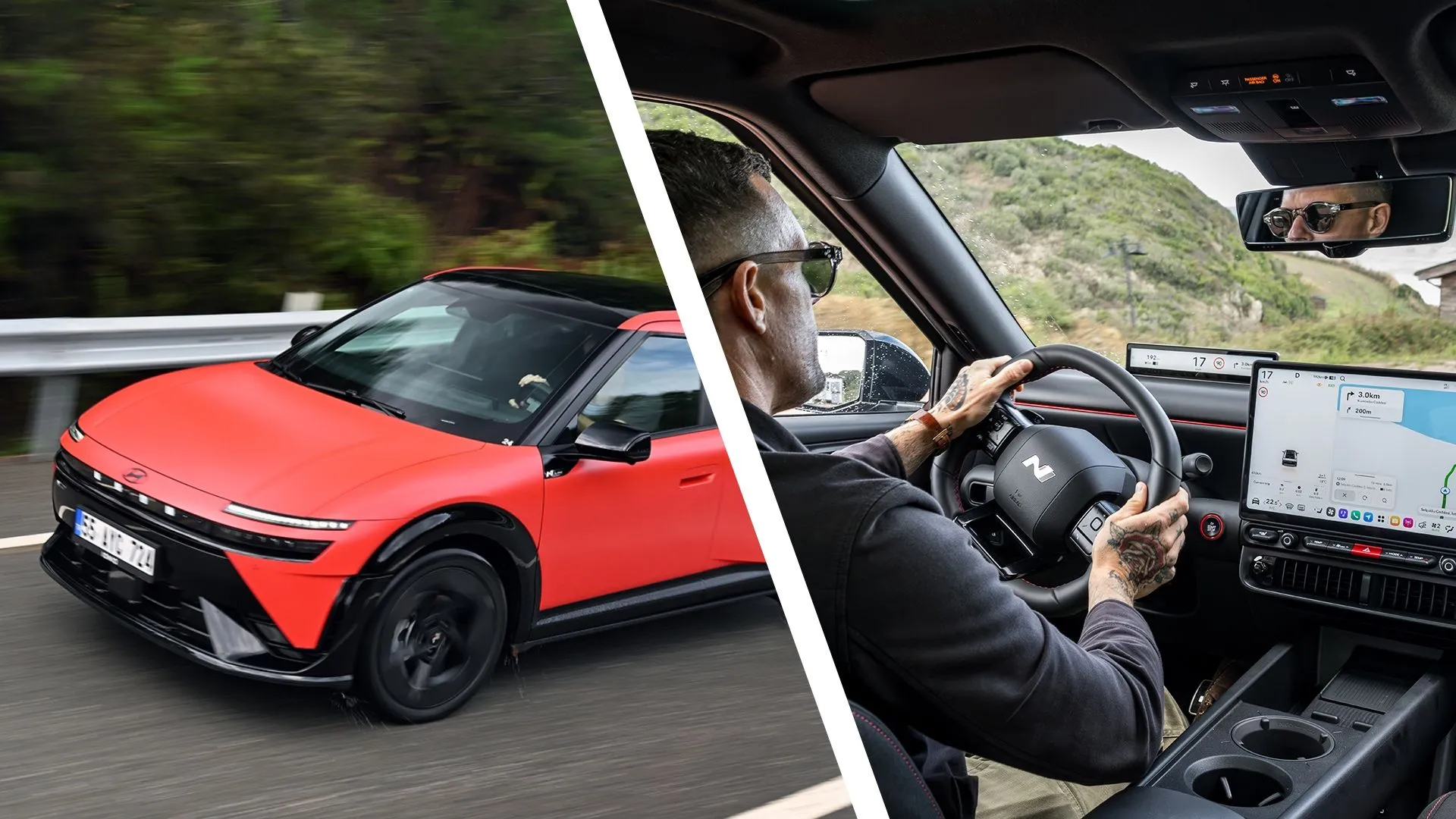
How does the Hyundai Ioniq 3 position itself in the EV market?
The Hyundai Ioniq 3 enters a highly competitive landscape where legacy manufacturers are increasingly defending their territory against low-cost Chinese newcomers. While Hyundai has successfully moved upmarket with luxury models costing over £70,000, the Ioniq 3 represents a strategic return to value-driven mobility. It aims to offer a sophisticated package that avoids the typical technological or spatial compromises found in ultra-budget models like the Dacia Spring or Leapmotor T03.
Hyundai's broader strategy involves a massive expansion, with the company aiming to launch or update 100 different models by the year 2030. The Ioniq 3 serves as a spearhead for this campaign, specifically targeting European urban needs. By combining a compact footprint suitable for tight city streets with a competitive range and modern design, Hyundai is attempting to bridge the gap between 'cheap' and 'accessible' electric transport.
What are the key technological features of the Ioniq 3?
The Ioniq 3 introduces the Pleos infotainment system, a significant technological shift that utilizes the Android Automotive Operating System to manage costs while maintaining high functionality. Rather than employing the expensive multi-screen arrays seen in larger models like the Ioniq 5, Hyundai has opted for a more streamlined approach featuring either a 12.9-inch or 14.6-inch central touchscreen, depending on the chosen trim level.
The interface design shows clear inspiration from Tesla, utilizing a layout that prioritizes intuitive swipes and a graphical representation of the vehicle for controlling functions like the trunk or windows. While some critics may find the aesthetic somewhat 'bolted on' to the dashboard, the system is noted for its rapid responsiveness and advanced connectivity. Key features include:
- EV-Specific Navigation: Detailed route planning optimized for electric vehicle requirements.
- Gleo AI: An AI-powered voice assistant integrated into Pleos Connect that understands natural-language commands for cabin control and third-party app interaction.
- Over-the-Air (OTA) Updates: Ensuring the vehicle's software remains current.
- Hyundai Digital Key 2: Allowing smartphone and wearable integration for vehicle access.
The Driver Display Debate
In a move that has sparked debate among enthusiasts, Hyundai offers a second digital driver display located behind the steering wheel as an optional extra. While some argue that a central screen should suffice—following the Tesla model—this option provides a traditional speedometer and instrument readout in the driver's direct line of sight, catering to those who prefer not to glance at a central console while navigating traffic.
How is the design and interior space optimized?
The Ioniq 3 utilizes a unique 'Aero Hatch' silhouette, a design language that combines Hyundai's 'Art of Steel' aesthetic with aerodynamic efficiency. The vehicle targets a drag coefficient of approximately 0.263 to maximize driving range. Visually, the car is defined by its signature pixel lighting and a four-dot motif that references the letter 'H' in Morse code, ensuring a distinct identity in low-light conditions.
Inside, the cabin follows a minimalist philosophy intended to maximize perceived space. Although the 'Furnished Space' concept from earlier prototypes was scaled back, the implementation of a flat floor helps enhance passenger roominess. The vehicle offers a total storage capacity of 441 liters, which is cleverly distributed between a 322-liter rear trunk and a 119-liter 'Megabox' located beneath the trunk floor. While the five-seat layout can accommodate three adults in the rear, it remains a relatively tight fit for larger passengers.
What are the performance and range specifications?
The Ioniq 3 is built on the K3 Platform, utilizing a 400-volt electrical architecture that supports DC fast charging from 10% to 80% in roughly 29 minutes. Performance varies depending on the battery size and trim level, which can lead to some confusion for buyers as the lower-range models actually offer higher power outputs.
| Model Variant | Battery Capacity | Power Output | WLTP Range |
|---|---|---|---|
| Standard Range | 42.2 kWh | 107.8 kW (147 hp) | Over 344 km (214 miles) |
| Long Range | 61 kWh | 99.5 kW (135 hp) | Over 497 km (310 miles) |
In real-world driving conditions, such as testing on uneven surfaces, the vehicle demonstrated efficient use of smart regenerative braking. While WLTP figures are optimistic, real-world expectations sit closer to 200+ miles for the Standard variant and approximately 250 miles for the Long Range version. The driving character is tuned for urban agility; the acceleration is brisk and well-suited for city sprints, though the cabin can experience noticeable wind noise during higher-speed motorway driving.
Frequently asked questions
What is the starting price of the Hyundai Ioniq 3 in the UK?
In the UK, the Hyundai Ioniq 3 starts at £18,495. This price is inclusive of the £3,750 Electric Car Grant, making it one of the most affordable electric vehicles currently available on the market without significant technological compromises.
How long does it take to charge the Ioniq 3?
Using a DC fast charger, the Ioniq 3 can charge its battery from 10% to 80% in approximately 29 minutes. This is made possible by the vehicle's 400-volt electrical architecture and the K3 Platform.
Does the Ioniq 3 support smartphone integration for keys?
Yes, the Ioniq 3 features Hyundai Digital Key 2. This technology allows compatible smartphones and wearable devices to lock, unlock, and start the vehicle, while a dedicated app provides remote access to various vehicle functions and information.
What is the difference between the Standard and Long Range models?
The Standard Range model features a 42.2 kWh battery and produces 107.8 kW (147 hp), while the Long Range model uses a 61 kWh battery and produces 99.5 kW (135 hp). The Long Range offers significantly more mileage but slightly less peak power.
What is Gleo AI?
Gleo AI is an integrated AI-powered voice assistant within the Pleos infotainment system. It uses natural-language processing to allow drivers to control vehicle functions, access information, and interact with services like Spotify through simple conversation.
Key takeaways
- The Ioniq 3 starts at £18,495 in the UK, including the £3,750 Electric Car Grant.
- It features the new Pleos infotainment system based on Android Automotive OS.
- The 'Aero Hatch' design targets a drag coefficient of 0.263 for improved efficiency.
- Charging from 10% to 80% via DC fast charging takes about 29 minutes.
- Storage capacity totals 441 liters, including a 119-liter 'Megabox' under the floor.
Conclusion
The Hyundai Ioniq 3 represents a calculated move by Hyundai to dominate the affordable EV segment. By prioritizing smart software through the Pleos system and efficient aerodynamics via the 'Aero Hatch' design, it avoids the 'budget' feel often associated with entry-level electric cars. While the interior space may be tight for three adults and motorway wind noise is present, its combination of rapid charging, intuitive AI, and competitive pricing makes it a formidable proposition for urban drivers seeking a modern, high-tech electric hatchback.