
What happened during the Knicks phishing test?
The New York Knicks organization sent a deceptive email to a wide list of employees in late September 2026, masquerading as an official offer for complimentary championship rings. The email, which promised high-quality jewelry to celebrate the franchise's recent NBA title, instructed recipients to click a link to select between two specific ring designs: "Championship Gold" and "Garden Classic."
According to reporting by Joe Vardon of The Athletic, the email was highly personalized, using phrases such as "(Employee name), this one is on the house" and promising the same craftsmanship used for player rings. The lure was designed to be plausible, as many NBA staff members do receive commemorative jewelry, even if it differs in scale from the rings awarded to players.
The consequences for those who fell for the simulation were immediate and corrective. Team sources indicated that employees who clicked the malicious link were forced to undergo mandatory cybersecurity classes. This measure was intended to address the growing security concerns of Knicks and Madison Square Garden owner James Dolan.
Why did Madison Square Garden use such a provocative lure?
Madison Square Garden (MSG) Sports implemented the phishing simulation as a direct response to previous security vulnerabilities. The organization admitted that the choice of a championship ring as a lure was an "unfortunate mistake," but defended the necessity of the training.
The decision to conduct aggressive testing stems from a prior security incident. MSG confirmed that the company had recently been the victim of a hack and extortion attempt. In that instance, attackers successfully obtained an employee login and password through a similar phishing attack, allowing them to compromise the network. By using a high-interest topic like the championship rings, the IT department sought to test the vigilance of staff members who might otherwise overlook standard security warnings.
The psychology of high-value phishing lures
Phishing simulations often rely on psychological triggers such as urgency, authority, or reward to bypass a user's critical thinking. In the case of the Knicks, the reward—a piece of expensive, personalized championship memorabilia—was a powerful motivator. While standard corporate phishing tests might use misspelled domains or generic requests, the Knicks' test utilized a highly relevant, emotionally charged, and financially valuable incentive that made the scam difficult to distinguish from a legitimate corporate perk.
What is the actual ring distribution plan for Knicks staff?
Despite the deceptive nature of the phishing test, the organization is moving forward with a legitimate jewelry distribution program for its employees. The company clarified that while the email was a simulation, the intent to reward the team's success remains a priority.
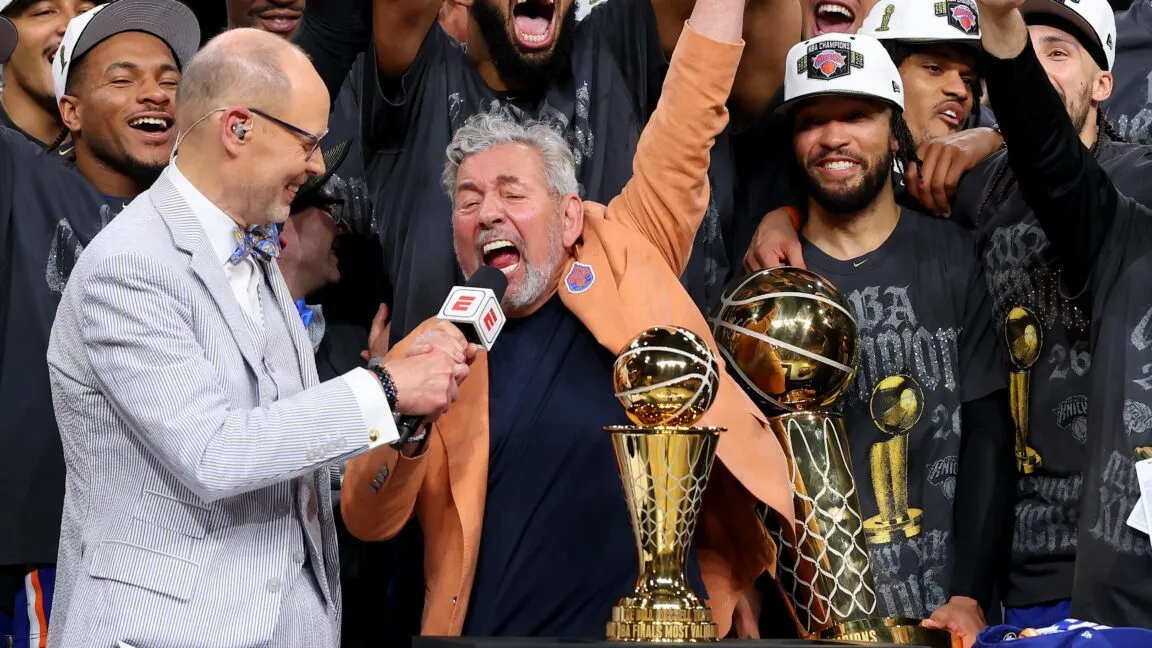
According to a statement from Madison Square Garden Sports, the company is gifting more than 275 pieces of championship rings and jewelry to various members of the "Knicks family." This includes players, coaches, and employees. The total value of this commemorative jewelry is estimated to be more than $3.7 million. The distribution aims to recognize the contributions of the staff toward the franchise's first league championship since 1973.
| Detail | Information |
|---|---|
| Total Jewelry Pieces | Over 275 |
| Estimated Total Value | More than $3.7 million |
| Target Recipients | Players, coaches, and employees |
| Reason for Distribution | Recognition of the 2026 NBA Championship |
How do corporate phishing tests typically function?
Corporate phishing simulations are a standard component of modern cybersecurity defense strategies. These tests involve sending controlled, fake malicious emails to employees to evaluate their ability to identify common red flags used by cybercriminals.
Common indicators that employees are trained to spot include:
- Misspelled domains: Using addresses that look similar to official ones but contain errors (e.g., "condenest.com" instead of "condenast.com").
- Unusual requests: Asking for passwords, sensitive data, or immediate financial actions.
- Suspicious links: URLs that do not match the supposed sender's official website.
- High-pressure tactics: Creating a false sense of urgency or offering unexpected, highly valuable rewards.
While the Knicks' test was criticized for its approach, the underlying goal—strengthening the human firewall against hackers—is a widespread practice in large corporations facing sophisticated digital threats.
Frequently asked questions
What was the specific content of the Knicks phishing email?
The email promised employees a complimentary championship ring with no cost to them. It featured a graphic of two different ring designs, "Championship Gold" and "Garden Classic," and requested that employees click a link to reserve their preferred style to satisfy the simulation's goal of testing link-clicking behavior.
What happened to employees who clicked the link?
Employees who interacted with the phishing link were required to attend mandatory cybersecurity training sessions. This corrective action was designed to address the security concerns of the organization's leadership and to ensure that staff members are better equipped to recognize future real-world attacks.
Did the Knicks staff actually receive rings?
Yes, the organization is conducting a legitimate distribution. MSG Sports stated they are gifting over 275 pieces of championship rings and jewelry, valued at over $3.7 million, to players, coaches, and employees to celebrate the team's recent championship victory.
Why did MSG call the test an "unfortunate mistake"?
The organization used the term "unfortunate mistake" to describe the choice of the championship ring as a lure. While the simulation was intended to prevent future hacks, the company acknowledged that using such a highly anticipated and valuable reward was an insensitive way to conduct a security test.
Was Madison Square Garden previously hacked?
Yes, Madison Square Garden confirmed that the company was recently targeted by hackers who used extortion tactics. The breach occurred after an employee's login credentials were stolen through a phishing attack similar to the one used in the recent championship ring simulation.
Key takeaways
- The Knicks sent a phishing simulation promising free championship rings to employees in late September 2026.
- Employees who clicked the link were required to complete mandatory cybersecurity training.
- MSG Sports confirmed the simulation followed a previous successful phishing attack and extortion attempt.
- The organization plans to distribute over 275 legitimate championship rings worth more than $3.7 million.
The balance between security and employee morale
The incident involving the New York Knicks highlights the delicate tension between rigorous cybersecurity protocols and employee relations. While the necessity of protecting an organization against extortion and data breaches is undeniable—especially following a successful attack—the method of implementation can have significant social consequences. By leveraging a high-value, emotional reward like a championship ring, the organization successfully tested its staff's vigilance but at the cost of significant annoyance and a perceived breach of trust. For large corporations, the challenge remains finding simulation methods that are effective in training without undermining the morale of the workforce they are trying to protect.




