
How have the SpaceX and Blue Origin mission architectures changed?
NASA has revised its coordination with private partners to streamline the logistics of lunar transit and docking. The agency is moving away from previous requirements, such as docking in a near-rectilinear halo orbit, to accommodate the technical realities of the participating commercial landers.
The SpaceX Starship approach
For SpaceX, the updated architecture involves fueling the Starship lunar lander in low-Earth orbit before it docks with the Orion spacecraft in high-Earth orbit. Under this plan, the crew will travel to the Moon inside the Orion capsule. Once near the Moon, two of the four astronauts will transfer into the Starship vehicle to perform the actual descent to the lunar surface.
A major point of technical debate remains the propellant requirements for Starship. While a NASA Safety Panel estimated that approximately 22 tanker launches would be necessary to top off the vehicle, SpaceX founder Elon Musk has suggested a much lower figure of six to eight launches. NASA Administrator Jared Isaacman noted that while Musk's estimate represents the "ultimate potential end state," it remains a possibility for the mission's execution.
The Blue Origin Blue Moon strategy
Blue Origin has modified its strategy to reach the Moon faster by removing the need for vehicle-to-vehicle refueling during initial missions. The revised plan utilizes a New Glenn rocket to launch three modified "transfer stages" into low-Earth orbit. These stages, based on the Blue Moon Mark 1 design, will rendezvous with the Blue Moon Mark 2 lander to facilitate the journey to the Moon.
NASA is also exploring the possibility of the Blue Moon lander docking with Orion in low-lunar orbit rather than an elliptical orbit 8,500 km above the surface. According to Jeremy Parsons, the NASA Artemis program manager, a low-lunar orbit would significantly decrease the amount of propellant required for the lander to transport astronauts to and from the surface, allowing that mass to be repurposed for other mission needs.
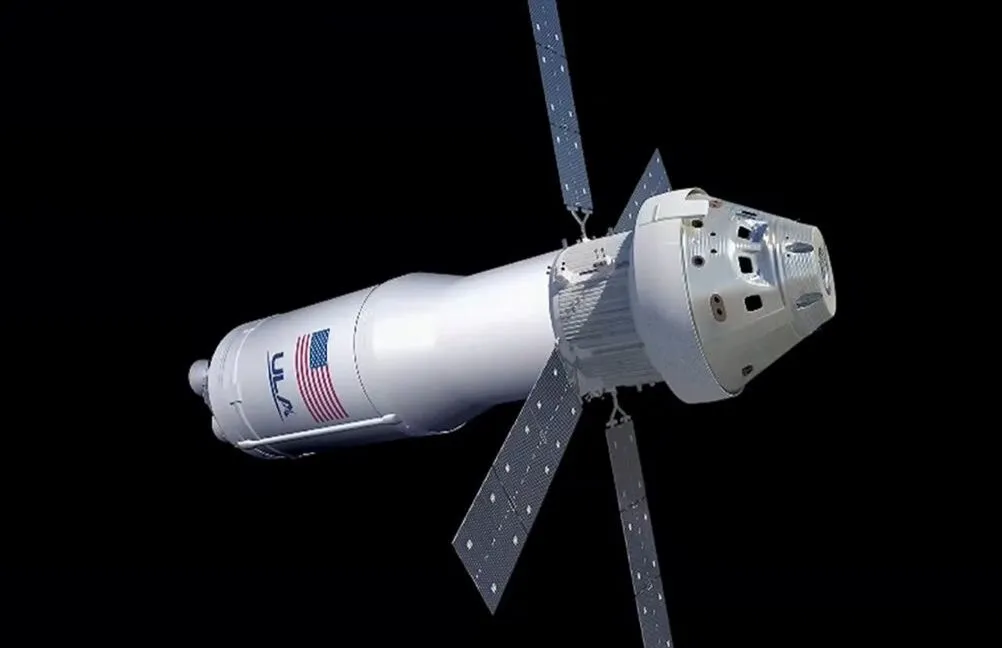
Why is the new Centaur V upper stage critical for Orion?
The development of an extended Centaur V upper stage is a strategic move to solve a long-standing propulsion limitation within the Artemis Program. Previously, the Orion spacecraft lacked the necessary delta-V capability to travel from Earth to a low-lunar orbit and still have enough fuel to return for a Pacific Ocean splashdown.
Historically, NASA relied on workarounds like the Lunar Gateway, which operated in a near-rectilinear halo orbit that Orion could reach with its existing Service Module. However, by working with United Launch Alliance to create the extended Centaur V, NASA intends to push Orion much closer to the Moon. This adjustment is designed to reduce the performance burden on the commercial lunar landers, making the final descent and ascent phases of the mission more manageable for partners like SpaceX and Blue Origin.
What is the updated timeline for the Artemis missions?
NASA is maintaining an ambitious schedule with a focus on achievable milestones through 2028. The agency's leadership has emphasized that they have the necessary mandate and resources to meet these revised targets.
- Artemis III (Summer 2027): This mission serves as a critical demonstration phase, involving docking procedures with both the Blue Moon lander and the SpaceX Starship near Earth.
- Artemis IV (2028): This mission is currently tracked to be the first to involve an actual human landing on the lunar surface.
Administrator Isaacman stated that the agency is actively listening to data from its landing partners to identify where they are struggling. By "turning those knobs" to improve Orion's orbital reach, NASA hopes to ensure that the commercial partners can meet their respective timelines without being overwhelmed by the physics of lunar transit.
FAQ: NASA Moon landing plans
What is the main goal of the Artemis III mission?
The Artemis III mission, targeted for summer 2027, is designed as a demonstration phase. It will test the ability of the Orion spacecraft to dock with both the Blue Origin Blue Moon lander and the SpaceX Starship vehicle in orbit near Earth.
How does the Centaur V stage help the Orion spacecraft?
The extended Centaur V upper stage provides the additional propulsion needed for Orion to reach low-lunar orbit. This solves a previous limitation where Orion lacked the delta-V to reach low lunar orbits and still return safely to Earth for splashdown.
How many refueling launches does SpaceX need for Starship?
There is currently a discrepancy in estimates. A NASA Safety Panel reported that approximately 22 tanker launches might be required, whereas Elon Musk has proposed that the number could be as low as six to eight launches.
Why is low-lunar orbit better for Blue Origin?
Docking in low-lunar orbit reduces the propellant mass required for the Blue Moon lander to move astronauts between the Moon's surface and the spacecraft. This efficiency allows for more payload or other mission-critical equipment to be carried.
What happened to the Lunar Gateway?
NASA canceled the Lunar Gateway earlier this year. This decision actually assisted SpaceX by removing the requirement for the Starship lander to dock with Orion in a near-rectilinear halo orbit, allowing for a more efficient docking in high-Earth orbit instead.
Key takeaways
- NASA aims for an Artemis III demonstration in summer 2027 and a lunar landing in 2028.
- SpaceX will now perform Orion docking in high-Earth orbit rather than lunar halo orbits.
- Blue Origin will use New Glenn rockets and transfer stages without requiring vehicle refueling.
- The new Centaur V upper stage enables Orion to reach much lower lunar orbits.
The path toward 2028
The updated NASA Moon landing plans represent a pragmatic shift from theoretical architectures to execution-focused logistics. By addressing the propulsion limitations of the Orion spacecraft through the Centaur V and relaxing orbital requirements for SpaceX and Blue Origin, NASA is attempting to mitigate the technical risks that have historically threatened the Artemis timeline. While uncertainties regarding Starship's refueling efficiency and the exact lift capacities of new heavy-lift rockets remain, the agency's commitment to supporting its commercial partners suggests a more integrated approach to lunar exploration. The success of the 2027 demonstration will be the ultimate test of whether these architectural adjustments can truly accelerate the return to the Moon.