
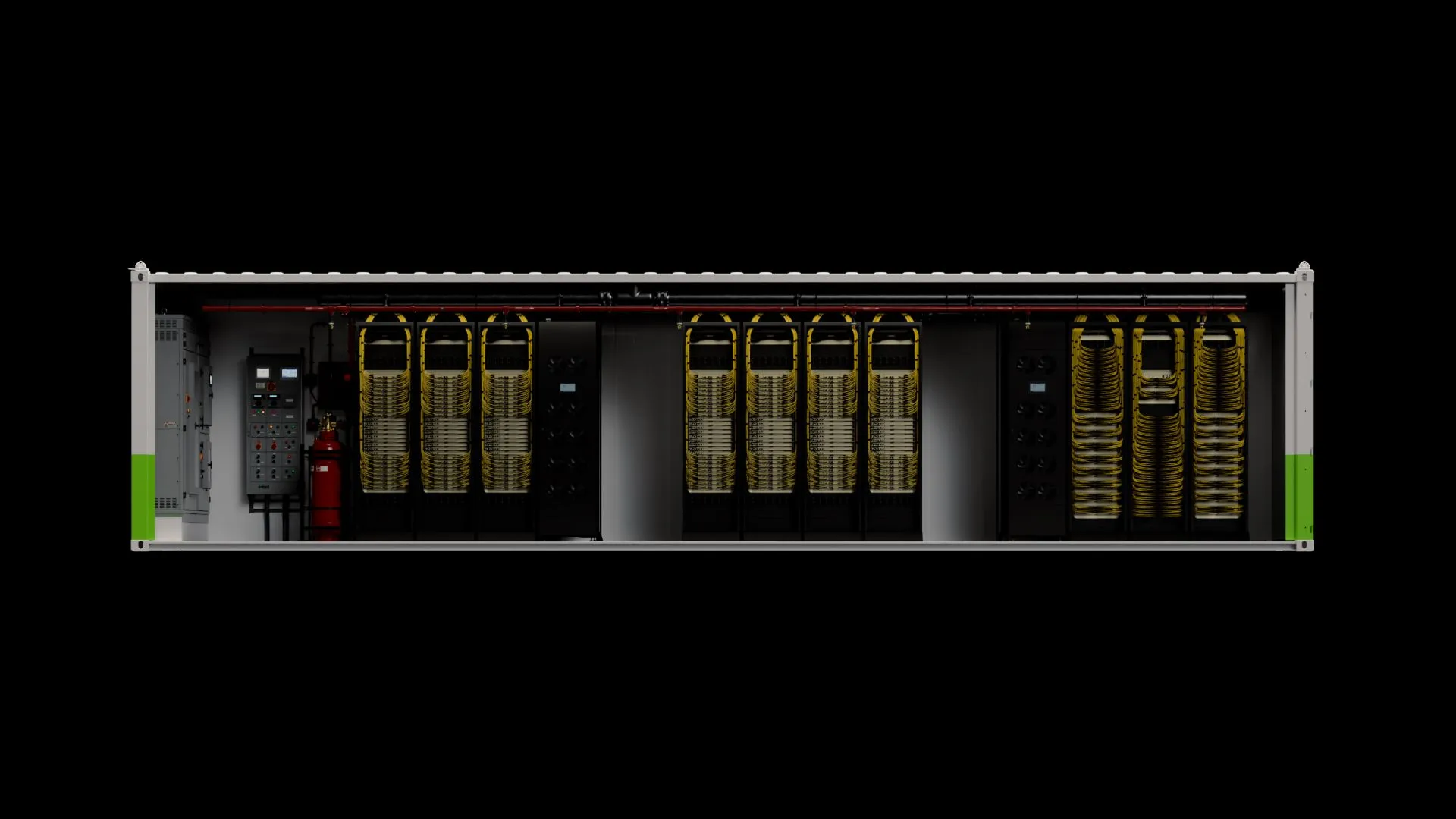
How does the Nvidia DSX POD accelerate AI deployment?
The Nvidia DSX POD utilizes a modular, factory-built container approach to reduce the time required to stand up AI infrastructure. Instead of performing complex assembly and integration tasks on-site at a construction location, major components are integrated within a controlled manufacturing environment before being shipped to the customer. This shift moves the heavy lifting of cabling, power connections, and cooling installation from the deployment site to the factory floor.
Nvidia claims that this method can shorten deployment schedules from the traditional six-month window to as little as 14 days. However, this rapid turnaround is contingent upon "site readiness," meaning the host facility must already possess the necessary supporting infrastructure, including sufficient power availability, cooling capacity, and networking connectivity to receive the units.
The shift from construction to manufacturing
By utilizing factory-built precision, Nvidia seeks to minimize the variables and delays often associated with on-site construction. Each container arrives with internal cabling, power connections, cooling pipes, and networking hardware already installed and tested. This allows operators to simply connect the unit to the prepared infrastructure at their chosen location, significantly reducing the manual labor and troubleshooting required during the final installation phase.
What hardware forms the foundation of the DSX POD?
The computing foundation of the DSX POD is built upon the upcoming Vera Rubin computing systems. Specifically, the reference design utilizes Vera Rubin NVL72 systems, which represent a significant leap in high-density AI computing. According to Nvidia, these systems consist of seven liquid-cooled computing racks that are interconnected through approximately 17 kilometres of Spectrum-X cabling.
Nvidia CEO Jensen Huang has emphasized that the value of an AI factory is realized through production rather than construction. He stated that an AI factory creates value when it starts producing tokens, and the DSX POD is designed to help customers scale capacity and bring revenue-generating production online with greater speed. The integration of the Vera Rubin architecture ensures that the modular containers are equipped with the latest high-performance computing capabilities required for modern large-scale model training and inference.
Can the DSX POD improve data center energy efficiency?
Nvidia claims that its DSX infrastructure platform can enhance resource efficiency through advanced power management and cooling technologies. One of the primary components is the DSX MaxLPS technology, which Nvidia suggests can deliver equivalent token output while using 30% less power. This is achieved through the dynamic allocation of electricity within the available power budget of an AI facility.
Furthermore, the DSX Flex component is designed to provide operational flexibility by adjusting data center power consumption in response to external variables. These variables include fluctuating electricity prices, grid conditions, and specific utility requirements, allowing the facility to optimize its energy footprint in real-time.
Addressing the water consumption challenge
Beyond electricity, the DSX POD aims to address the significant water usage typically associated with data center cooling. Nvidia's approach utilizes closed-loop liquid cooling combined with outdoor dry coolers to release heat, a method designed to eliminate water evaporation during normal heat rejection processes.
The environmental impact of this shift is substantial in scale. Nvidia estimates that a deployment operating at a 2GW capacity could save 54 million litres of water daily compared to conventional systems that rely on traditional cooling towers. However, it is important to note that these savings are dependent on local climate and operating conditions; extreme temperatures may necessitate additional mechanical cooling, which could impact the total water savings achieved.
Who is involved in the production and delivery of DSX POD?
Nvidia is not manufacturing these modular systems in isolation but is instead collaborating with a global network of industrial and technology partners. To ensure worldwide supply and manufacturing capability, Nvidia is working with established leaders including Dell Technologies, HPE, Lenovo, Schneider Electric, and Vertiv. This partnership model is intended to scale the production of DSX POD systems to meet the growing global demand for AI infrastructure.
Deliveries of the DSX POD systems are expected to begin in early 2027. While the technical roadmap is clearly defined, the projected efficiency gains in energy and water consumption remain subject to independent verification under real-world operating conditions. The success of the platform will ultimately depend on how these modular units perform when integrated into diverse global power grids and varying environmental climates.
Frequently asked questions
How much faster is the DSX POD deployment compared to traditional methods?
Nvidia claims the DSX POD can reduce deployment times from six months down to just 14 days. This acceleration is possible because the containers are factory-assembled with cabling, power, and cooling already installed, provided the host site has the necessary supporting infrastructure ready for connection.
What is the primary hardware used in the DSX POD?
The system is built around the upcoming Vera Rubin computing systems, specifically the Vera Rubin NVL72. These systems include seven liquid-cooled computing racks that are linked together using roughly 17 kilometres of Spectrum-X cabling to facilitate high-speed data transfer.
How does the DSX POD reduce electricity consumption?
Nvidia utilizes DSX MaxLPS technology to achieve up to 30% less power usage for the same token output. It does this through dynamic allocation within the facility's electricity budget. Additionally, DSX Flex helps adjust consumption based on electricity prices and grid conditions.
What are the water-saving benefits of this modular system?
By using closed-loop liquid cooling and dry coolers instead of traditional cooling towers, Nvidia aims to eliminate water evaporation. At a 2GW scale, Nvidia estimates a daily saving of 54 million litres of water, though extreme weather may affect these figures.
When will the DSX POD be available for customers?
Nvidia expects to begin deliveries of the DSX POD systems in early 2027. The rollout is supported by a manufacturing partnership involving companies like Dell, HPE, Lenovo, Schneider Electric, and Vertiv to ensure global availability.
Key takeaways
- Nvidia DSX POD aims to reduce AI infrastructure deployment from six months to 14 days.
- The system is built on Vera Rubin NVL72 hardware using 17km of Spectrum-X cabling.
- DSX MaxLPS technology can potentially reduce power consumption by 30% for equivalent output.
- Closed-loop cooling could save 54 million litres of water daily at a 2GW scale.
- Global deliveries of these modular AI factories are scheduled to start in early 2027.
Conclusion
The Nvidia DSX POD represents a strategic shift toward treating AI infrastructure as a modular, factory-produced commodity rather than a bespoke construction project. By integrating Vera Rubin hardware into pre-configured, liquid-cooled containers, Nvidia seeks to solve two of the most pressing challenges in the AI era: the slow pace of data center deployment and the massive environmental footprint of high-performance computing. While the promised 30% power reduction and significant water savings require real-world verification, the move toward integrated, efficient, and rapidly deployable "AI factories" marks a significant evolution in how global computing capacity is scaled.