
Why is there a sudden demand for RAM pooling in AI?
The surge in demand for local AI inference is colliding with a severe global shortage and price volatility in the memory market. According to TradeMAV, the cost of high-capacity memory has escalated dramatically; for instance, a 64GB DDR5 kit that cost approximately $191 in August 2025 reportedly reached $1,118 just one year later. This trend is supported by broader market data showing that DDR5 prices reached 486% of their July 2025 levels by mid-August.
Industry analysts suggest this supply-demand imbalance is not a short-term glitch. Samsung has indicated that these shortages may persist through 2028, while leadership at SK Group has warned that the pressure on the memory market could continue until 2030. For individual users and small labs, the cost of upgrading a single machine with enough VRAM or system RAM to host massive models like GPT-class architectures has become a significant financial barrier. The RAMDeck hub proposes that instead of purchasing expensive new hardware, users can 'borrow' the idle memory sitting in their existing ecosystem of devices.
How does the RAMDeck hub technically distribute AI models?
The RAMDeck hub does not attempt to merge memory at a physical hardware level, which would be technically impossible across disparate devices. Instead, it operates as an orchestration layer that manages how a model's computational load is divided. The system functions by splitting the layers of a Large Language Model (LLM) among the connected machines in a network. Each device holds its specific portion of the model in its local memory, and only the intermediate mathematical results are passed across the network as each token is generated.
The underlying software architecture
The 'engine' driving this process is not proprietary in its core logic; rather, it leverages the existing llama.cpp framework. Specifically, the hub utilizes the llama.cpp RPC (Remote Procedure Call) backend. TradeMAV's contribution to the stack is the automation and user interface surrounding this protocol. According to the company's features page, the hub provides:
- Automatic device discovery: Finding all compatible nodes on the local network without manual configuration.
- Intelligent layer placement: Prioritizing fast GPU memory (VRAM) before utilizing slower system RAM.
- Failure recovery: Managing the cluster if one device disconnects.
- Management tools: A dedicated dashboard and an OpenAI-compatible API for easier integration with existing AI tools.
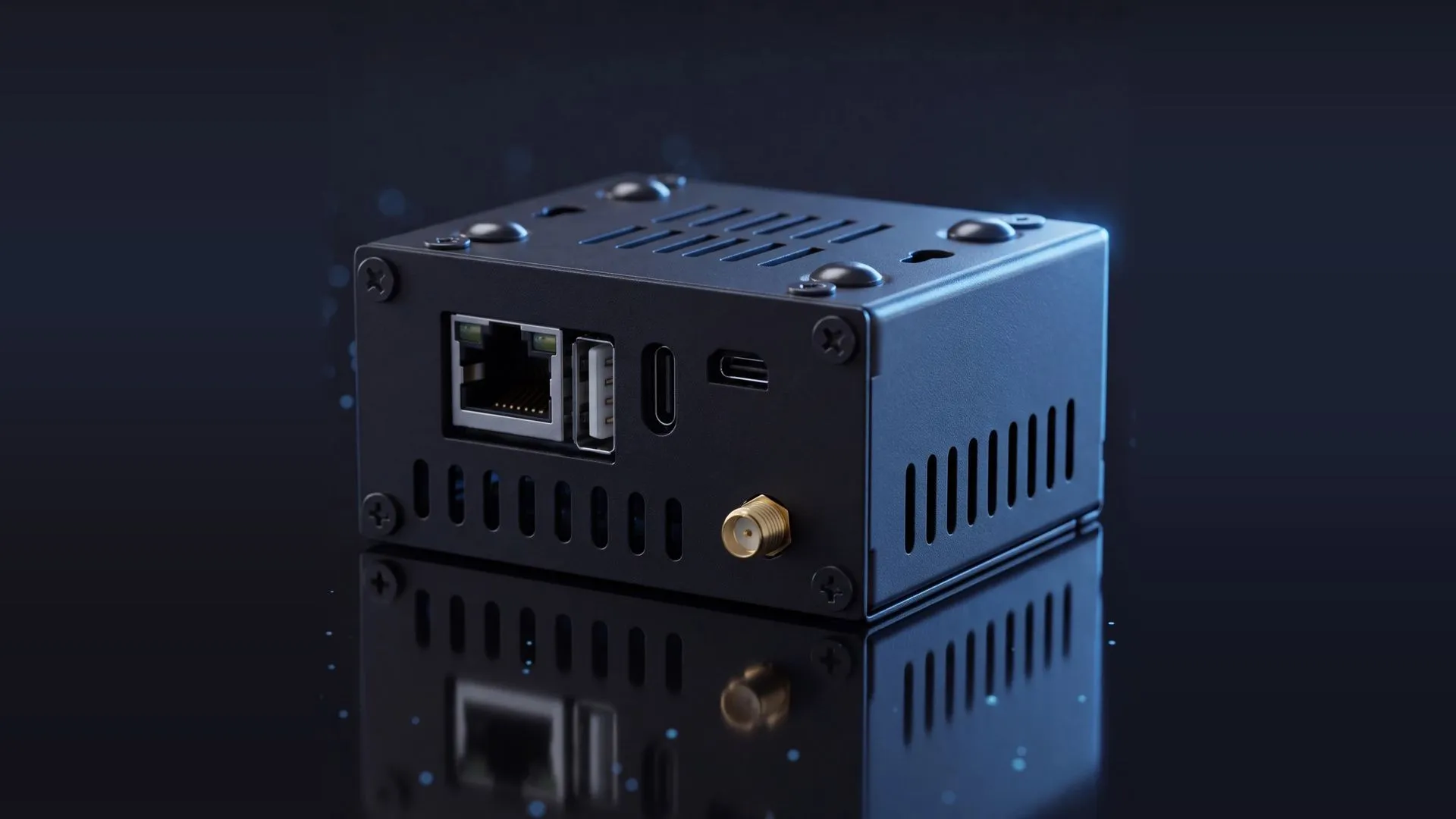
While the software orchestration is robust, the physical specifications of the RAMDeck hub itself remain undisclosed. TradeMAV has not yet published details regarding the hub's internal processor, its total onboard memory, available ports, or its power consumption requirements.
What is the impact of RAM pooling on inference speed?
Users must accept a fundamental trade-off: pooling memory increases capacity at the direct expense of processing speed. TradeMAV is transparent about this limitation, noting that those seeking high-performance inference should instead invest in a single machine with a high-VRAM GPU. The performance of the RAMDeck system varies wildly depending on whether the model uses a 'dense' architecture or a 'Mixture-of-Experts' (MoE) structure.
Mixture-of-Experts models, which only activate a fraction of their total parameters for each token, perform significantly better in a distributed environment. In one demo, a Beelink mini PC equipped with an RTX 3060 combined with an M4 Mac mini achieved 39 tokens per second when running the Qwen3-Coder 30B model. Another MoE variant, the 40B REAP version of Qwen3-Coder-Next, reached 16 tokens per second.
In contrast, dense models—where every parameter is engaged for every calculation—suffer from much higher latency. TradeMAV's benchmarks show a 27B dense model managing only 1.92 tokens per second across four devices. Even larger models face extreme delays; an OpenAI gpt-oss-120b model ran at just 1.37 tokens per second on a six-device cluster, while a different five-machine setup for a 120B model reached 3.1 tokens per second after a lengthy seven-minute initialization period. While these speeds are slow, they prevent the 'out-of-memory' crashes that typically occur when trying to run such models on standard consumer hardware.
How does RAMDeck compare to existing solutions?
The concept of distributed inference is already established in both the open-source and high-end professional sectors. For the DIY enthusiast, the 'free' route is already available via software. For example, Exo Labs' open-source project, 'exo,' has provided automatic device discovery and a drop-in API across various computers and phones since early 2025. Users comfortable with terminal scripts and command-line interfaces can achieve similar results using the raw llama.cpp RPC protocol without purchasing any additional hardware.
At the professional and enterprise level, the technology is even more integrated. Apple's M5 Ultra Mac Studio supports high-speed clustering via Thunderbolt 5 using Remote Direct Memory Access (RDMA). Apple claims that clustering four such machines can deliver up to three times the inference speed of a single unit. The primary differentiator for the RAMDeck hub is its intended breadth of compatibility. Unlike Apple's ecosystem, which is largely closed, the RAMDeck aims to bridge a heterogeneous mix of hardware, including Windows CUDA desktops, Apple Silicon Macs, older Intel-based Macs, Linux workstations, and Android mobile devices.
Frequently asked questions
Is the RAMDeck hub a replacement for a high-end GPU?
No, the RAMDeck is intended to complement existing hardware rather than replace it. It is designed to provide the memory capacity required to run massive models that would otherwise crash a single machine. However, it will be significantly slower than a single, powerful GPU due to network latency and distributed processing.
Can I use this with my current smartphone?
Yes, according to TradeMAV's product documentation, the hub is designed to include Android phones in the memory pool. This allows the mobile device to contribute its available RAM to the cluster, helping to host larger model layers alongside your PC or Mac.
What is the cost of the RAMDeck hub?
The hub is currently being offered through an Indiegogo crowdfunding campaign. Early backers can secure the device for an early-bird price of $109. However, as with all crowdfunding, the final retail price and delivery timelines are subject to the success of the campaign.
Does the hub work with all AI models?
The hub relies on the llama.cpp ecosystem, meaning it is compatible with models that can be run via that framework. While it can run a wide variety of LLMs, performance will vary significantly between Mixture-of-Experts (MoE) models and traditional dense models.
Is there a free alternative to buying this hub?
Yes, there are free open-source alternatives available. Projects like 'exo' by Exo Labs or using the llama.cpp RPC server directly via terminal commands allow users to pool memory across devices without purchasing dedicated orchestration hardware.
Key takeaways
- The RAMDeck hub aims to pool RAM from various devices to run large AI models.
- It targets users facing high DDR5 memory costs and supply shortages.
- The device uses the llama.cpp RPC backend for distributed inference.
- Performance is significantly higher for Mixture-of-Experts models than dense models.
- The hub provides orchestration, discovery, and an API for heterogeneous hardware.
The RAMDeck hub represents an attempt to democratize access to large-scale AI by repurposing existing hardware. While it offers a convenient, plug-and-play solution for a heterogeneous mix of devices, it does not bypass the laws of physics; the trade-off for increased memory capacity is a notable reduction in inference speed. For advanced users, the software-only routes remain a viable and free alternative, but for those seeking a simplified management layer, the $109 entry point provides an interesting, albeit unproven, proposition in the evolving landscape of edge AI computing.




