
Why did SpaceX decline US Space Force launch contracts?
SpaceX declined to provide services for three upcoming military satellite missions recently offered by the US Space Force. According to Politico, these missions were listed through the National Security Space Launch initiative, with two specifically intended for the Space Development Agency. The agency is currently tasked with constructing a massive network of hundreds of military satellites in low-Earth orbit to enhance missile warning, tracking, and data services.
The refusal by SpaceX is part of a broader trend where the company has been declining to sign new launch contracts for its Falcon 9 and Falcon Heavy vehicles across various customer segments. This decision leaves the Space Force in a difficult position, as no other rocket companies were able to offer immediate alternatives for these specific missions.
The impact of limited launch capacity
The lack of available rides for these missions underscores a significant bottleneck in the current space economy. Brig. Gen. Eric Zarybnisky, the acting portfolio acquisition executive for the Space Force, noted that the government is experiencing growing pains as demand for orbital launches outstrips current provider capacity. While the Space Force is working to integrate new providers, the immediate shortfall highlights a reliance on a limited number of reliable heavy-lift vehicles.
How are new startups like Reaction Dynamics and PLD Space responding?
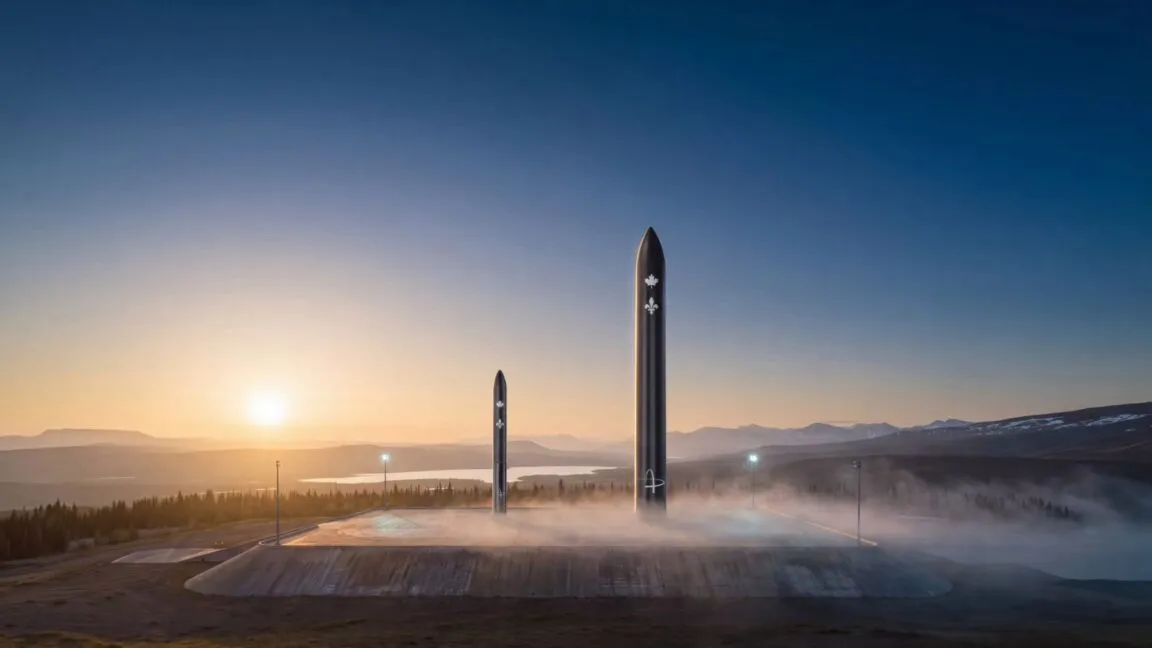
New aerospace entrants are positioning themselves to capture market share by offering specialized launch capabilities. Reaction Dynamics, a prominent Canadian startup, is currently seeking to raise $350 million to expand its workforce from 68 to over 350 employees. The company is focusing on two distinct vehicle tiers: the small-lift Aurora rocket, aimed for an orbital debut in 2028, and the medium-lift Borealis rocket, planned for 2031.
Bachar Elzein, founder and CEO of Reaction Dynamics, stated that the company's goal is to ensure Canada can reach orbit on its own terms, providing sovereign access to space at scale. The Borealis rocket is expected to have a lift capacity of 6 tons to low-Earth orbit, which is approximately half of the payload capacity offered by Rocket Lab’s Neutron vehicle.
Similarly, Spain's PLD Space is advancing its Miura 5 rocket. According to an October 19 program update from CEO Raúl Torres, the company has already manufactured three Miura 5 vehicles to facilitate continuous production learning and system qualification. One second stage is currently undergoing testing at the Teruel facility, including wet dress rehearsals and static hot-fire tests, with a target for the first flight before mid-2027.
What is the current state of the medium-lift rocket race?
The medium-lift launch sector is undergoing a generational shift after a long period of stagnation. It has been 13 years since the United States saw the debut of a new medium-lift rocket, following the introduction of the Antares vehicle by Orbital Sciences Corporation. Today, a new wave of vehicles is being developed that differ significantly from the older generation of rockets, which often relied on international components.
Four primary contenders are currently driving development in the United States:
- Stoke Space: Developing the Nova vehicle.
- Relativity Space: Working on the Terran R.
- Rocket Lab: Developing the Neutron rocket.
- Firefly and Northrop Grumman: Collaborating on the Eclipse vehicle.
This competition aims to fill the gap between small-lift vehicles like Rocket Lab's Electron—which recently prepared for its 98th launch to deploy HawkEye 360 satellites—and the massive heavy-lift vehicles used for interplanetary missions.
What are the latest milestones in international space exploration?
Global space agencies continue to push the boundaries of interplanetary science, even as commercial competition intensifies. Japan recently launched the $578 million MMX (Martian Moons eXploration) mission, a five-year expedition designed to land on Phobos, the largest moon of Mars, and retrieve samples for Earth return.
The MMX spacecraft was launched via a modified H3 rocket, Japan's flagship vehicle. To meet the requirements of this ambitious mission, the H3 utilized a new configuration featuring four strap-on solid rocket boosters, full-throttle main engines, and an extended payload shroud. This mission represents a significant technical undertaking, especially following the failed attempt by Russia's Phobos-Grunt mission in 2011 to achieve similar sample-return objectives.
Frequently asked questions
Why is SpaceX refusing military contracts?
SpaceX has been declining new Falcon 9 and Falcon Heavy contracts for various customers, suggesting a capacity limit or a strategic shift in how they allocate their launch manifest. This has created a temporary gap in availability for the US Space Force's National Security Space Launch requirements.
What is the goal of Reaction Dynamics?
Reaction Dynamics aims to provide Canada with sovereign access to orbit. They are developing the Aurora small-lift rocket for 2028 and the Borealis medium-lift rocket for 2031, which will be capable of carrying 6 tons to low-Earth orbit.
When will PLD Space launch its Miura 5?
PLD Space is targeting a first flight for its Miura 5 small-lift vehicle before mid-2027. The company is currently using multiple manufactured units to qualify key systems and conduct testing at their Teruel facility.
How many launches has Rocket Lab's Electron completed?
Rocket Lab is preparing for its 98th launch of the Electron vehicle. The upcoming mission involves deploying three HAWK satellites for the constellation operator HawkEye 360, continuing the company's status as a frequent commercial launcher.
What is the purpose of the Japan MMX mission?
The MMX mission is a $578 million robotic expedition to Mars' moon, Phobos. Its primary objective is to land on the moon and retrieve samples to bring back to Earth for scientific analysis.
Key takeaways
- SpaceX declined three US Space Force contracts due to limited launch availability.
- Reaction Dynamics is seeking $350 million to develop Aurora and Borealis rockets.
- PLD Space aims for a Miura 5 inaugural launch before mid-2027.
- Japan launched the $578 million MMX mission to sample Phobos.
- A new generation of US medium-lift rockets is currently under development.
The evolving landscape of orbital access
The space industry is currently defined by a tension between established giants and emerging competitors. While SpaceX's refusal of military contracts highlights a potential vulnerability in government launch security, it also signals a maturing commercial market where launch capacity is a highly sought-after commodity. As startups in Canada, Spain, and the US work to bring new medium- and small-lift vehicles online, the monopoly on reliable access to orbit is gradually eroding. This diversification is essential for sustaining the massive increase in satellite deployments required by both military and commercial sectors in the coming decade.