
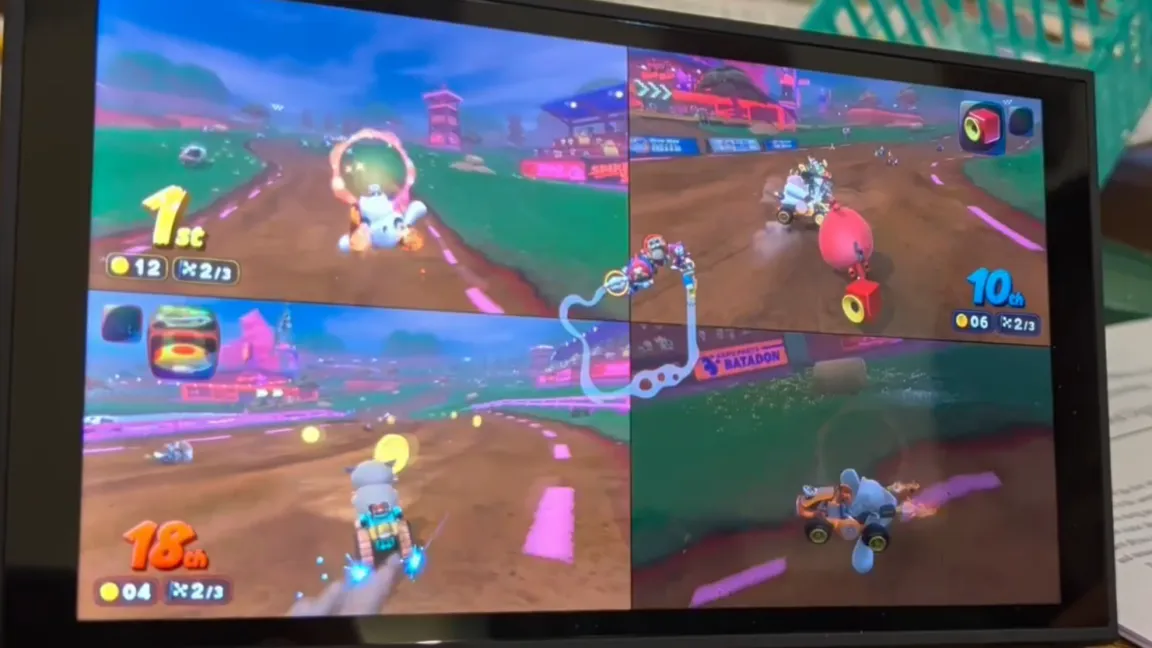
How did the Switch 2 jailbreak achieve userland access?
The current Switch 2 jailbreak provides what researchers call "userland" access, which allows for specific high-level modifications without gaining total control over the system's core kernel. According to researcher Sammy Hajhamid, also known as Pepsipu, this level of access enables users to run homebrew software, reverse engineer games, and modify existing titles. Furthermore, it allows for the backing up of save files and the ability to interact with most of the console's peripherals through Memory-Mapped I/O (MMIO).
Despite these capabilities, the exploit is not a complete takeover of the hardware. Because it is a userland exploit, developers are still confined to a relatively restricted sandbox. They cannot bypass the deepest security layers of the operating system, which are protected by the kernel. This distinction is critical; while the hack is powerful for modding and customization, it does not grant the absolute authority over the hardware that a kernel-level exploit would provide.
The distinction between userland and kernel access
In the context of console security, userland refers to the area where most applications and games run. An exploit at this level is highly effective for software modification and data management. However, the kernel is the most privileged part of the operating system, managing the hardware and enforcing security boundaries. A kernel exploit would allow hackers to bypass almost all restrictions, making the console truly "unlocked." The current Switch 2 exploit remains one step below this ultimate goal.
What is the technical mechanism behind the SmileBasic exploit?
The exploit leverages a 32-bit integer overflow found within the SmileBasic 4 interpreter, a programming environment that runs on Nintendo hardware. Researcher Sammy Hajhamid utilized OpenAI’s Codex to analyze the SmileBasic language interpreter through a custom harness. This harness was capable of sending USB commands to the system and monitoring results via HDMI, even utilizing a Bluetooth-enabled device to cycle the console's power.
After approximately two weeks of intensive research, the vulnerability was identified during the process of removing items from an array within the SmileBasic environment. This error provided access to an array pointer, which subsequently granted read-and-write access to specific segments of the system memory. From this initial foothold, the researcher was able to probe the console's internal sysmodules to find deeper vulnerabilities.
The process eventually led to the discovery of a buffer overflow within the console's FileSystem services module. This secondary vulnerability exposed a cached data pointer, which granted arbitrary read-and-write privileges. By exploiting this, Hajhamid was able to execute privileged filesystem actions and eventually achieve native code execution through a simulated filesystem process.
Why is the SmileBasic software central to this vulnerability?
SmileBasic is a long-standing series of programming environments and interpreters used on Nintendo platforms, and its history is deeply intertwined with console security. The software has previously served as a primary vector for exploits on older hardware. For example, the 3DS version of SmileBasic was the foundation for the "smilehax" exploit in 2016. This historical precedent highlights how legitimate developer tools can be repurposed by researchers to find security flaws.
In response to previous exploits, Nintendo has a history of removing such software from its digital storefronts. Following the 3DS hack, Nintendo delisted SmileBasic from the 3DS eShop. Similarly, SmileBasic 4 has already been removed from the Switch eShop globally. This delisting serves as a defensive measure to prevent new users from acquiring the software necessary to facilitate such exploits.
The impact of software delisting on exploit spread
The removal of SmileBasic from official stores acts as a barrier to entry for the average user. If a user does not already own the software, they cannot easily download it to attempt the hack. This significantly slows the spread of the exploit among the wider Switch 2 user base. However, this defense is not foolproof, as the software remains accessible to those who previously purchased it or through other means.
How does this compare to previous Nintendo console hacks?
While the Switch 2 jailbreak is a notable achievement, it is not as devastating as the original Nintendo Switch exploit discovered in 2018. The 2018 exploit was considered "unpatchable" because it relied on a hardware-level vulnerability. To prevent future consoles from being susceptible to that specific attack, Nintendo was forced to implement a complete hardware redesign for subsequent iterations of the Switch.
The current Switch 2 exploit is purely software-based and can be addressed through firmware updates. It is already confirmed to work on the latest firmware version, 23.0.1, but Nintendo can patch this vulnerability in imminent releases. Once the firmware is updated, the specific path used to trigger the integer overflow in SmileBasic will likely be closed, requiring hackers to find entirely new vulnerabilities.
| Feature | Switch 2 (Current Exploit) | Original Switch (2018 Exploit) |
|---|---|---|
| Type | Software-only (Userland) | Hardware-based |
| Patchability | Patchable via firmware update | Unpatchable (Required hardware redesign) |
| Access Level | Userland (Sandbox) | Full System Control |
| Primary Vector | SmileBasic 4 (Integer Overflow) | Hardware vulnerability |
What is the future outlook for Switch 2 security?
The emergence of this exploit just over a year after the Switch 2's release suggests that Nintendo's system software is not as impenetrable as initially thought. The hacking community is already demonstrating progress, with researchers teasing new exploits that may work using different games rather than relying on SmileBasic. This indicates a persistent and evolving threat landscape.
The relationship between console manufacturers and the hacking community remains a continuous cycle. As Nintendo strengthens its software defenses and implements more frequent firmware updates, hackers will continue to seek out new entry points, whether through programming interpreters, file system services, or other system modules. The ability to run homebrew and mod games remains a high priority for the community, ensuring that the search for new vulnerabilities will continue unabated.
FAQ: Switch 2 jailbreak
What can users do with the Switch 2 jailbreak?
The jailbreak allows for userland access, enabling users to run homebrew applications, modify existing games (such as adding new characters to Mario Kart World), reverse engineer software, and back up their game save files. It also provides access to most console peripherals through MMIO.
Is the Switch 2 jailbreak permanent?
No, the current exploit is a software-based vulnerability that can be patched by Nintendo through a firmware update. While it currently works on version 23.0.1, future updates are expected to close the security loopholes used by researchers.
How does this hack differ from the 2018 Switch hack?
The 2018 Switch hack was a hardware-level vulnerability that was unpatchable, requiring Nintendo to change the physical design of the console. The Switch 2 exploit is a software-only userland exploit that can be fixed with a simple system update.
Is SmileBasic 4 still available for purchase?
SmileBasic 4 has already been delisted from the Switch eShop worldwide. This is a common defensive move by Nintendo to prevent the software from being used as a tool for exploits, similar to what happened with the 3DS version.
Does this exploit provide full control of the console?
No, the current exploit provides "userland" access, which keeps developers within a restricted sandbox. It does not provide the kernel-level access required to gain absolute, unrestricted control over the entire hardware system.
Key takeaways
- The Switch 2 jailbreak provides userland access via a SmileBasic 4 integer overflow.
- Users can run homebrew, mod games, and back up save files with this exploit.
- The hack is software-based and can be patched by future Nintendo firmware updates.
- This exploit is less severe than the unpatchable hardware hack of 2018.
Conclusion
The discovery of a userland exploit for the Switch 2 represents a significant, albeit limited, breach in Nintendo's security architecture. By leveraging vulnerabilities in the SmileBasic 4 interpreter and the console's filesystem services, researchers have demonstrated that game modification and homebrew execution are possible shortly after the console's launch. While this software-based attack is patchable and lacks the total control of a kernel exploit, it underscores the persistent nature of the cat-and-mouse game between hardware manufacturers and the hacking community. As Nintendo moves to secure its ecosystem through firmware updates, the cycle of discovery and patching is expected to continue.




