What are the technical specifications of the Topping DX1 II?
The Topping DX1 II is built around the highly capable ESS ES9039Q2M DAC chipset, utilizing a sophisticated dual-DAC architecture. This design employs a dedicated digital-to-analog converter for each individual channel, ensuring fully independent processing to minimize noise and distortion. To manage signal processing, Topping has integrated a 16-core XMOS XU-316, which works alongside the fully balanced analog stage to maintain high fidelity.
In terms of file support, the unit is well-equipped for high-resolution enthusiasts, capable of handling digital audio up to 32-bit/384kHz and DSD256. Connectivity is versatile, offering both digital optical input and a USB-C port on the rear panel that handles both data and power delivery. For users requiring compatibility with gaming consoles like the Nintendo Switch or PlayStation 5, the device includes a switch to toggle between UAC 1.0 and UAC 2.0 modes.
Connectivity and Output Options
The device offers a comprehensive array of connection points for various listening scenarios. On the output side, users can choose between an unbalanced 3.5mm headphone socket or balanced 4.4mm alternatives. Notably, one of these 4.4mm outputs is specifically intended for headphone use, while the other serves as a line-level connection for external systems, such as powered speakers. Additionally, stereo RCA outputs are available for line-level analog connections, and an optical output allows for the preservation of the digital signal when routing to other equipment.
How does the Topping DX1 II perform in terms of sound quality?
The sound signature of the Topping DX1 II is characterized by impressive detail retrieval and a pleasant, naturalistic tonal balance. When testing with high-quality files, such as a 24-bit/48kHz FLAC, the device demonstrates an acute ability to capture subtle harmonic overtones and manage transients with confidence. Rather than focusing solely on technical precision, the DX1 II gives these details proper weighting, ensuring that the emphasis remains on the musicality of the recording.
The overall character of the device is easy-going and laid-back, making it an excellent choice for long listening sessions without fatigue. While it can produce urgency when required, its fundamental attitude is polite and mature. This "grown-up" approach is a significant step up from standard laptop outputs, providing improved soundstaging, rhythmic expression, and a much clearer sense of musicality.
Dynamic Range and Frequency Response
Despite its strengths, the DX1 II is not without its sonic limitations. It lacks a certain level of dynamic impetus, meaning the contrast between very quiet and very loud passages—the "headline dynamics"—can feel somewhat flattened. This is partly due to a slight shortage of headroom, which prevents the device from breathing as deeply as more expensive high-end units. Furthermore, there is a noticeable, albeit acceptable, roll-off in the highest frequencies. While the treble extension is sufficient, it lacks the aggressive "bite" or assertiveness found in more clinical DACs.
Can the user customize the audio performance?
Topping provides significant opportunities for end-user customization through both hardware and software interfaces. Users can access the 'Home Web' platform to adjust parameters such as gain and select from eight different digital filters. This level of control allows listeners to fine-tune the device to match their specific headphone pairings or musical preferences.
For even deeper customization, the 'Topping Tune' software offers a user-friendly drag-and-drop interface for Parametric EQ (PEQ) adjustments. This system allows for 10-band control over frequency, gain, and bandwidth, with the added benefit of independent left and right channel adjustment. Because these PEQ settings can be applied across all outputs, the DX1 II functions as a highly flexible tool for users who want to correct specific frequency responses or create a bespoke sound profile.
How is the build quality and design of the device?
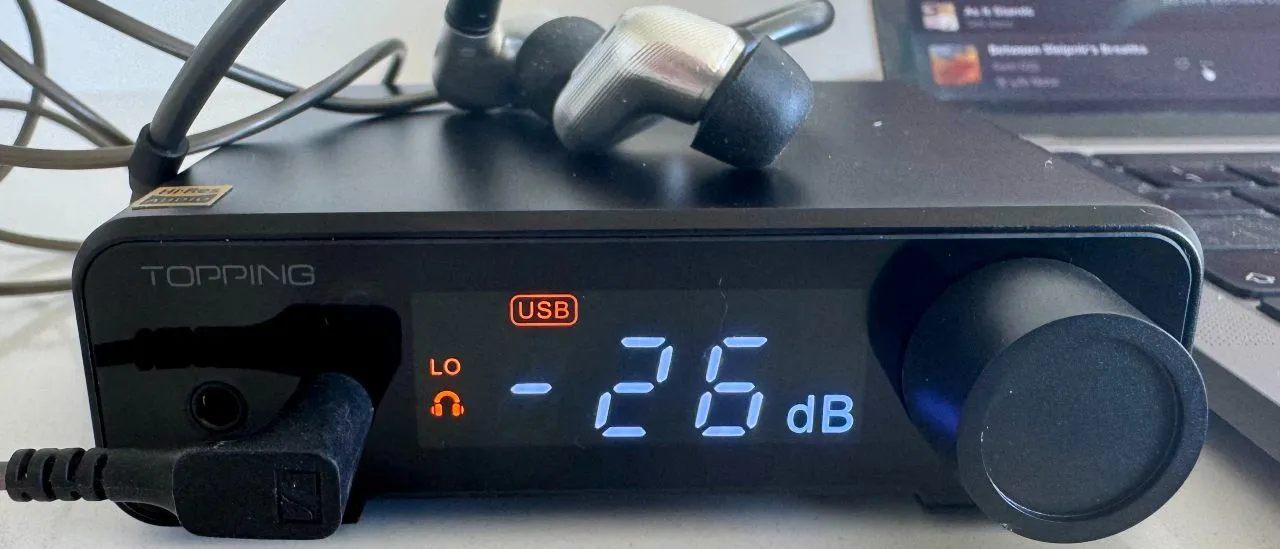
The Topping DX1 II features a compact, machined aluminum chassis measuring 32 x 100 x 100mm (HxWxD). This small footprint ensures it does not occupy excessive space on a desktop or within an equipment rack. At 275g, the unit is substantial enough to remain stable on a desk and is not easily moved by the weight of heavy headphone cables, yet it remains portable enough for easy relocation.
The construction is high-quality, with nicely rounded edges that prevent any sharpness. However, the density of the socketry on the rear panel is quite high. While this is a common necessity in small-form-factor devices, it does mean that users may find it difficult to use particularly thick or premium-grade cables, as they may compete for space near the connection points.
Key takeaways
- The Topping DX1 II features a dual-DAC architecture using the ESS ES9039Q2M chipset for high-resolution audio.
- It supports high-fidelity playback of files up to 32-bit/384kHz and DSD256.
- The device offers both 3.5mm unbalanced and 4.4mm balanced headphone outputs.
- Extensive customization is available via eight digital filters and 10-band PEQ software.
- The sound profile is detailed and easy-going, though it lacks significant dynamic headroom.
FAQ: Topping DX1 II
Is the Topping DX1 II compatible with gaming consoles?
Yes, the device is compatible with consoles like the Nintendo Switch and PlayStation 5. To achieve this, users simply need to use the dedicated switch on the unit to toggle the USB mode to UAC 1.0, ensuring the hardware is recognized correctly by the gaming system.
What is the difference between the two 4.4mm outputs?
The Topping DX1 II provides two distinct 4.4mm outputs to serve different purposes. One is designed specifically for driving headphones with a balanced connection, while the second serves as a line-level output for connecting the DAC to external powered speakers or other audio systems.
Does the Topping DX1 II require a separate power supply?
The device is designed for desktop convenience using a USB-C connection. The USB-C port on the rear of the unit handles both data transmission and power delivery, meaning it can be powered directly from a computer or a suitable USB power source without extra cables.
How does the PEQ feature work?
The PEQ feature is managed through the 'Topping Tune' software, which uses a drag-and-drop interface. It allows users to adjust frequency, gain, and bandwidth across 10 different bands. Importantly, users can adjust the left and right channels independently to achieve a perfectly balanced soundstage.
Is the Topping DX1 II a good choice for long listening sessions?
The DX1 II is particularly well-suited for long sessions due to its easy-going and non-fatiguing tonal balance. While it is not an aggressive or "in-your-face" device, its naturalistic sound and polite character prevent the listener from experiencing ear fatigue during extended periods of use.
Conclusion
The Topping DX1 II represents a highly competent entry into the desktop DAC/amplifier market. By combining a sophisticated ESS-based dual-DAC architecture with extensive software customization via PEQ, it offers a level of technical control rarely seen at its $119 price point. While it may lack the raw dynamic impact and treble assertiveness of more expensive high-end gear, its detailed, polite, and easy-going sound makes it an incredibly reliable tool for daily listening. It is a well-built, compact solution for anyone looking to significantly upgrade their computer audio experience.