What makes the Vantex V1 mechanical keyboard design unique?
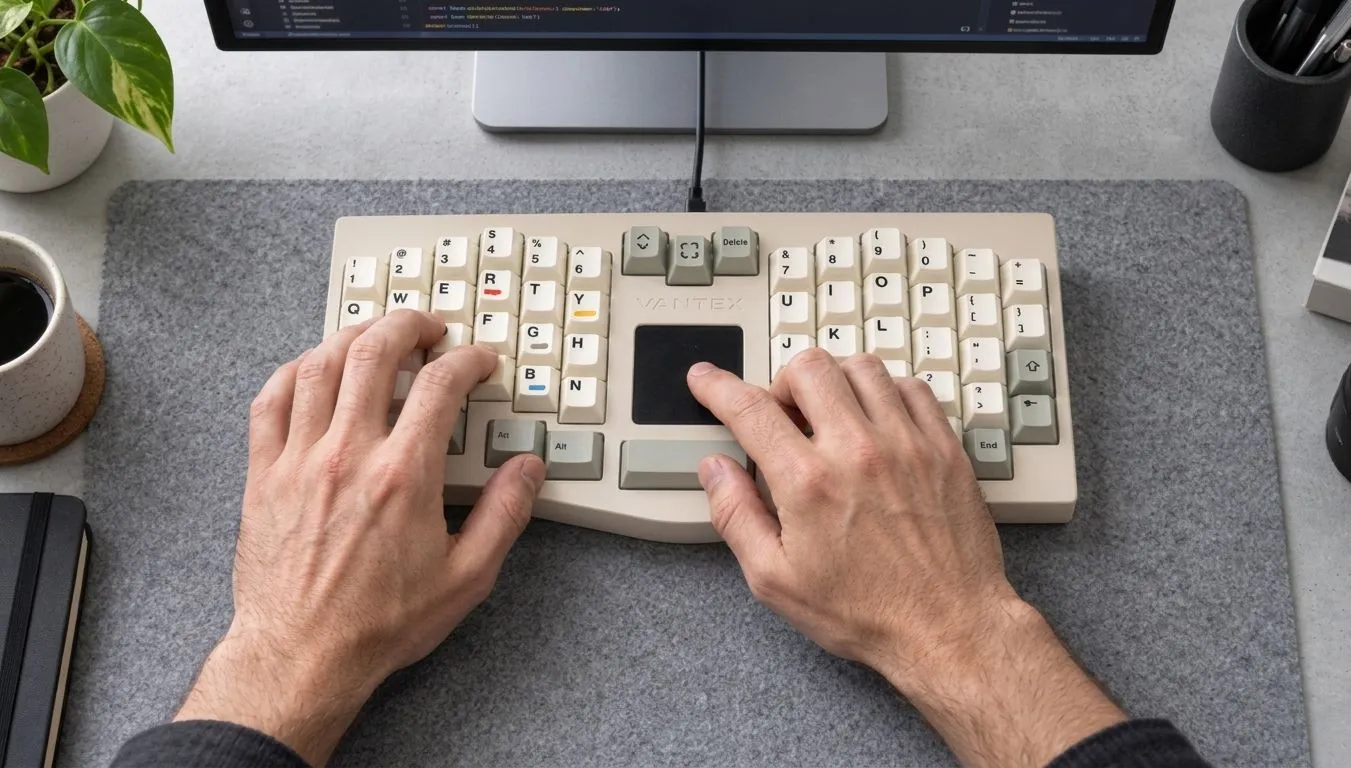
The Vantex V1 mechanical keyboard distinguishes itself through a split key arrangement that integrates navigation directly into the typing interface. By placing a 45 × 45 mm touchpad in the gap between the two keyboard sections, the design allows users to control cursor movement without shifting their hands to a peripheral mouse. This ergonomic approach aims to streamline workflows by keeping hands centered on the device.
Constructed from CNC-machined aluminium, the keyboard features a durable powder-coated finish and a rearward incline of 7°. The physical footprint measures 30.74 × 13.74 × 3.48 cm, with a total weight of approximately 1.57 kg. This substantial build quality is intended to provide stability for both typing and navigation tasks.
Ergonomics and Build Quality
The split design is not merely a stylistic choice but a functional one intended to reduce repetitive reaching motions. The gasket-mounted construction is a notable inclusion, as it provides a cushioned keystroke experience typically sought after by mechanical keyboard enthusiasts. This method of assembly helps dampen vibration and provides a more premium tactile feel during prolonged use.
What are the technical specifications of the Vantex V1?
The Vantex V1 is equipped with 60 keys and supports four programmable layers, offering significant customization for various software environments. The device arrives with white linear switches that are designed for longevity and specific tactile feedback.
- Switch Actuation Force: 42 ± 3 gf
- Bottom-out Force: 47 ± 5 gf
- Lifespan: 50 million keystrokes
- Keycap Material: PBT with dye sublimation printing
A key feature for enthusiasts is the hot-swappable nature of the mechanical switches, which allows for replacement without the need for soldering. Additionally, the keyboard includes an interchangeable keycap collection to facilitate user customization. The wired prototype has already undergone compatibility testing with Windows, macOS, and Linux operating systems.
How does the Vantex V1 handle connectivity and power?
Vantex offers multiple connectivity options to suit different user setups, including USB-C, Bluetooth, and 2.4 GHz wireless. While the wired version provides a stable connection, the wireless model is designed for mobility, powered by an integrated 4,000 mAh battery.
However, potential backers should note that the wireless version is still in the development phase. Vantex has stated that they are currently evaluating the real-world battery runtime, connectivity stability, and overall performance of the wireless components. Consequently, the exact operating duration of the 4,000 mAh battery remains unconfirmed at this stage of the campaign.
Connectivity Comparison
| Feature | Wired Package | Wireless Package |
|---|---|---|
| Connection Types | USB-C | Bluetooth, 2.4 GHz, USB-C |
| Battery | N/A | 4,000 mAh |
| Status | Tested (Windows/macOS/Linux) | Under evaluation |
What is the pricing structure for the Kickstarter campaign?
The Vantex V1 Kickstarter campaign offers significant discounts for early supporters, with some packages priced at 50% off the intended retail value. The pricing is divided into wired and wireless tiers, as well as single and dual keyboard bundles.
Wired Package Pricing
The introductory wired package is priced at $129, which is a substantial reduction from the standard $259 retail price. This specific package is designed for users who wish to customize their own setup, as it includes the keyboard without pre-fitted keycaps, along with 148 keycaps and a data cable. For those needing more hardware, a two-keyboard wired bundle is available for $239, compared to a retail price of $518.
Wireless Package Pricing
The wireless tier starts at $159 for a single unit. For users requiring a dual setup, a two-keyboard wireless bundle is offered at $299, representing a 50% discount against the advertised $598 standard price. Because the wireless functionality is still being refined, Vantex advises backers to consider the development risks associated with these specific tiers.
Why did Vantex omit the Copilot key?
Unlike many contemporary Windows-compatible keyboards, the Vantex V1 does not feature a dedicated Microsoft Copilot key. This omission appears to be a deliberate design choice intended to cater to users who prefer traditional keyboard layouts.
By excluding the dedicated AI assistant button, Vantex provides a cleaner interface for professionals and enthusiasts who may find a specialized AI key intrusive or unnecessary for their standard workflows. This decision aligns with the broader trend of customizable hardware where users prioritize control over pre-defined software shortcuts.
What are the risks and potential delays for the Vantex V1?
As with many crowdfunding projects, the Vantex V1 campaign carries inherent production risks. Vantex has explicitly identified several factors that could lead to delays in delivering the product to backers.
The company has listed component availability, assembly consistency, final testing, packaging, and international shipping as primary potential bottlenecks. Furthermore, Vantex has disclosed that they utilize AI-assisted tools for their promotional writing, visual design, and image enhancement. This transparency suggests that the campaign's visual materials may not be a perfect representation of the final, mass-produced product.
Campaign Status and Funding
As of the latest reports, the Vantex V1 campaign has successfully exceeded its initial funding goal of $637. With 19 backers contributing $2,556, the project shows early momentum, though there are still 27 days remaining before the campaign closes. Potential backers are encouraged to evaluate these development risks and the unverified wireless performance before committing funds.
Frequently asked questions
What is the main feature of the Vantex V1?
The primary feature is the integrated 45 × 45 mm central touchpad located within the split keyboard design. This allows users to control the mouse cursor without moving their hands away from the typing area, facilitating a more seamless transition between typing and navigation.
Can I change the switches on the Vantex V1?
Yes, the Vantex V1 features hot-swappable mechanical switches. This means users can replace or customize their switches to change the typing feel or sound without needing to perform any soldering, making it highly accessible for enthusiasts.
Is the Vantex V1 compatible with Mac and Linux?
Yes, Vantex has confirmed that their wired prototype has undergone testing with Windows, macOS, and Linux. This ensures broad compatibility across the most common desktop operating systems used in professional and personal environments.
Does the keyboard come with keycaps?
The wired introductory package includes 148 keycaps but they are not pre-fitted to the keyboard, requiring manual installation. The keycaps are made of PBT material and use dye sublimation printing for durability and customization options.
What are the risks of the Kickstarter campaign?
Backers face risks such as potential production delays due to component availability or assembly issues. Additionally, since the wireless version is still in development, its battery life and connectivity performance have not yet been fully verified in real-world conditions.
Key takeaways
- The Vantex V1 features a split design with a central 45 × 45 mm touchpad for mouse control.
- Pricing starts at $129 for wired packages and $159 for wireless configurations.
- The keyboard is built with a CNC-machined aluminium body and gasket-mounted construction.
- It includes 60 keys, four programmable layers, and hot-swappable linear switches.
- The wireless version is still in development with a 4,000 mAh battery.
Conclusion
The Vantex V1 mechanical keyboard represents a niche attempt to merge typing and navigation into a single, cohesive device. By integrating a central touchpad into a split, aluminium-bodied layout, Vantex targets users looking for ergonomic efficiency and high customizability. While the Kickstarter pricing offers significant savings, the ongoing development of the wireless features and potential production bottlenecks necessitate caution. As the campaign progresses, the transition from a prototype to a mass-produced consumer product will be the ultimate test of its integrated navigation concept.