
How did the campaign structure of Dawn of War 4 evolve?
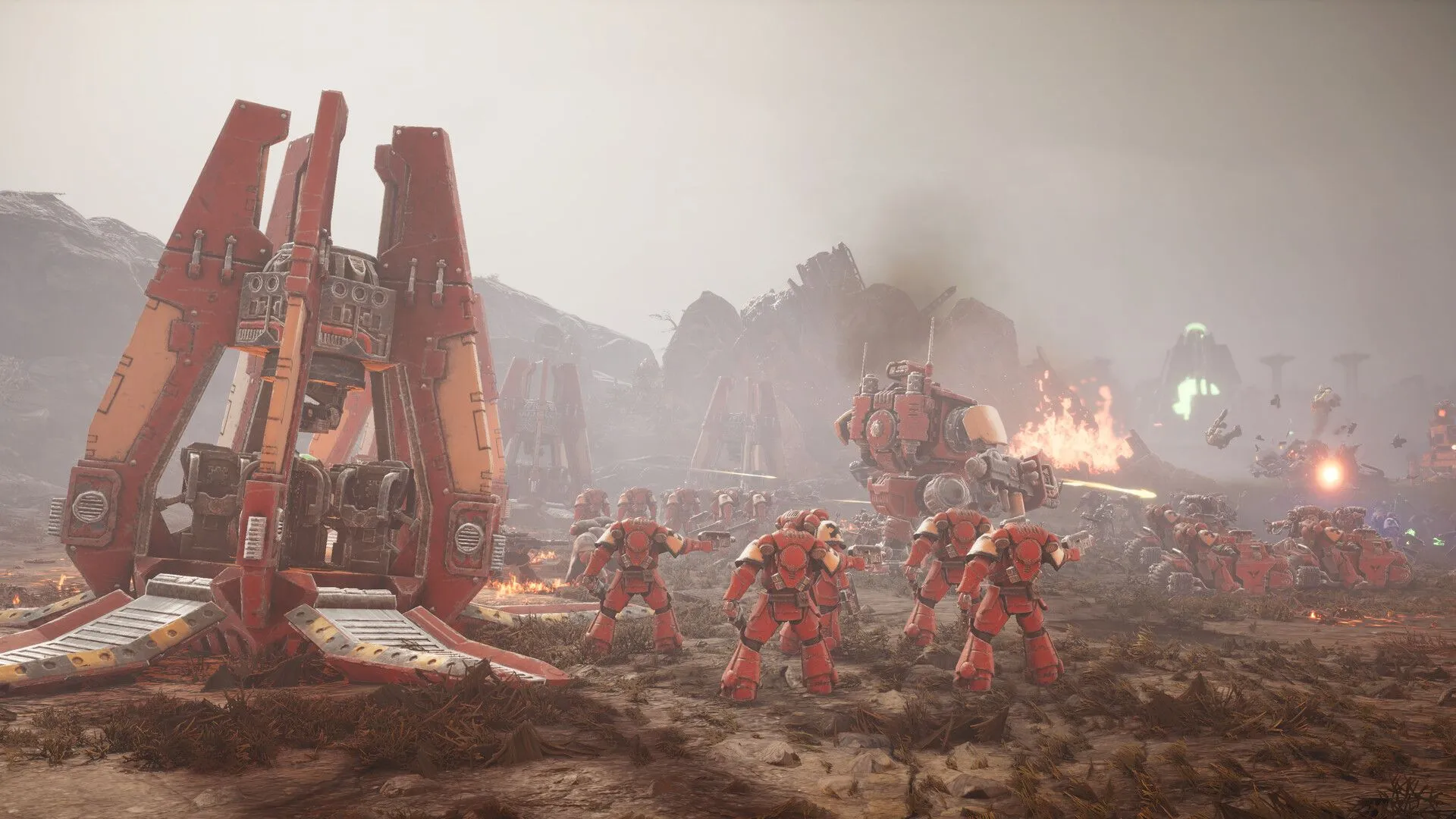
The foundational design of Warhammer 40,000: Dawn of War 4 was built around the concept of four separate faction campaigns, a decision made during the earliest stages of development. Jan Theysen, King Art co-founder and the game's creative director, noted that the team decided on this structure "super early" because the Warhammer IP is inherently defined by its diverse factions. Instead of a single unified narrative, the developers opted to provide dedicated content for the Space Marines, Orks, Necrons, and Adeptus Mechanicus.
The logic behind this approach was to ensure players could fully grasp the unique characteristics and lore of each group. Theysen explained that playing only as the Space Marines would not provide sufficient insight into the depth of the Necrons or the Adeptus Mechanicus. By dedicating a full campaign to each, the developers aim to showcase the "weird and crazy and cool" nature of each faction, ensuring that no group is relegated to a mere antagonist role in someone else's story.
The 'Snowball' Effect of Creative Ambition
What began as a structured plan for four campaigns quickly expanded into a much larger project due to the team's enthusiasm for narrative depth. Theysen described the development process as a "snowball" effect, where one idea naturally led to more complex requirements. As the team grew more invested in the storytelling potential, they began incorporating branching paths and player agency into the missions, significantly increasing the total mission count to approximately 70.
What features define the cinematic experience of the new RTS?
King Art has looked toward the gold standards of the real-time strategy genre to shape the presentation of Dawn of War 4. Specifically, the team studied successful RTS campaigns, such as Warcraft 3, to understand how to blend gameplay with high-quality storytelling. This influence is visible in the game's emphasis on a cinematic experience, which includes integrated cutscenes and a focus on hero-driven narratives.
The developers intend to move beyond simple combat encounters by creating a story that is "more interesting" through character development and visual flair. This approach aims to satisfy fans of the tactical RTS genre while also appealing to those who seek a deep, lore-driven narrative. By utilizing heroes and cinematic transitions, the game seeks to bridge the gap between traditional strategy gameplay and modern cinematic storytelling.
How do branching storylines and hero selection affect gameplay?
Player agency is a central pillar of the Dawn of War 4 experience, manifested through branching storylines and the ability to select specific heroes. The developers wanted to move away from linear mission structures, instead offering players the opportunity to change how a story progresses. This creates a sense of consequence, where player decisions can lead to different outcomes or mutually exclusive missions.
The inclusion of hero selection adds another layer of strategic variety. According to Theysen, being able to choose a hero allows players to experience "two different sides of the same story." This mechanic ensures that even within a single faction campaign, the player's approach can alter the tactical landscape and the narrative direction, contributing to the overall scale of the 70-mission journey.
Impact of Mutually Exclusive Missions
The implementation of mutually exclusive missions means that the player's choices have tangible impacts on the campaign's progression. Rather than simply following a set path, players may find themselves locked out of certain content based on previous decisions, reinforcing the weight of their tactical and narrative choices. This design choice is a key driver behind the massive scope of the game's content.
How did collaboration with Games Workshop influence the game?
Maintaining lore accuracy was a critical component of the development process, requiring close coordination between King Art and Games Workshop. Theysen confirmed that the development team engaged in ongoing discussions with the IP holders to ensure that the four faction campaigns remained faithful to the established Warhammer 40,000 universe. This collaboration was essential to support the ambitious storytelling goals the team set for themselves.
By working closely with Games Workshop, King Art was able to weave the specific identities of the Space Marines, Orks, Necrons, and Adeptus Mechanicus into the branching narratives. This ensures that while the game introduces new creative directions and player-driven paths, the core essence of the factions remains intact, providing a satisfying experience for long-term fans of the franchise.
Frequently asked questions
When is the release date for Warhammer 40,000: Dawn of War 4?
Warhammer 40,000: Dawn of War 4 is scheduled to launch on PC on December 3. The game is being developed by King Art and is expected to provide a massive RTS experience for fans of the franchise.
Which factions are featured in the game's campaigns?
The game features four distinct campaigns for the Space Marines, Orks, Necrons, and Adeptus Mechanicus. Each faction has its own dedicated story and progression, ensuring a deep dive into the lore of each group.
How many missions are included in the game?
The creative director, Jan Theysen, stated that the game features approximately 70 missions. This high number is a result of the ambitious scope of the four branching faction campaigns developed by the King Art team.
Will there be branching paths in the story?
Yes, the game includes branching storylines and mutually exclusive missions. Players can influence how the story progresses and choose different heroes, which can lead to different narrative outcomes within the campaigns.
What inspired the cinematic style of the game?
The development team looked to successful RTS titles like Warcraft 3 as inspiration. They aimed to create a cinematic experience that utilizes cutscenes and hero-centric narratives to make the story more engaging for players.
Key takeaways
- Dawn of War 4 will feature four major campaigns for the Space Marines, Orks, Necrons, and Adeptus Mechanicus.
- The game is expected to contain approximately 70 missions due to its branching narrative structure.
- King Art is incorporating cinematic elements, including cutscenes and heroes, inspired by titles like Warcraft 3.
- The game is scheduled for a PC release on December 3.
The future of Dawn of War on PC
The scale of Warhammer 40,000: Dawn of War 4 represents a significant commitment to the RTS genre. By prioritizing faction-specific depth and player agency through branching paths, King Art is attempting to elevate the standard for narrative-driven strategy games. While the sheer volume of content—70 missions across four campaigns—is an ambitious undertaking, it reflects a desire to provide a comprehensive experience that honors the complex lore of the Warhammer 40,000 universe. As the December 3 launch approaches, the industry will be watching to see if this massive scope translates into a definitive RTS experience.




