How did scientists discover the Laurentide Ice Sheet was re-expanding?
Direct physical evidence from the Barnes Ice Cap on Baffin Island indicates that the Laurentide Ice Sheet, which once covered much of Canada, began a period of regrowth approximately 2,000 years ago. While the massive ice sheet reached its minimum size around 3,600 years ago, the subsequent expansion suggests the onset of a new glacial period. This process was only interrupted in the mid-20th century by rising global temperatures caused by human activity.
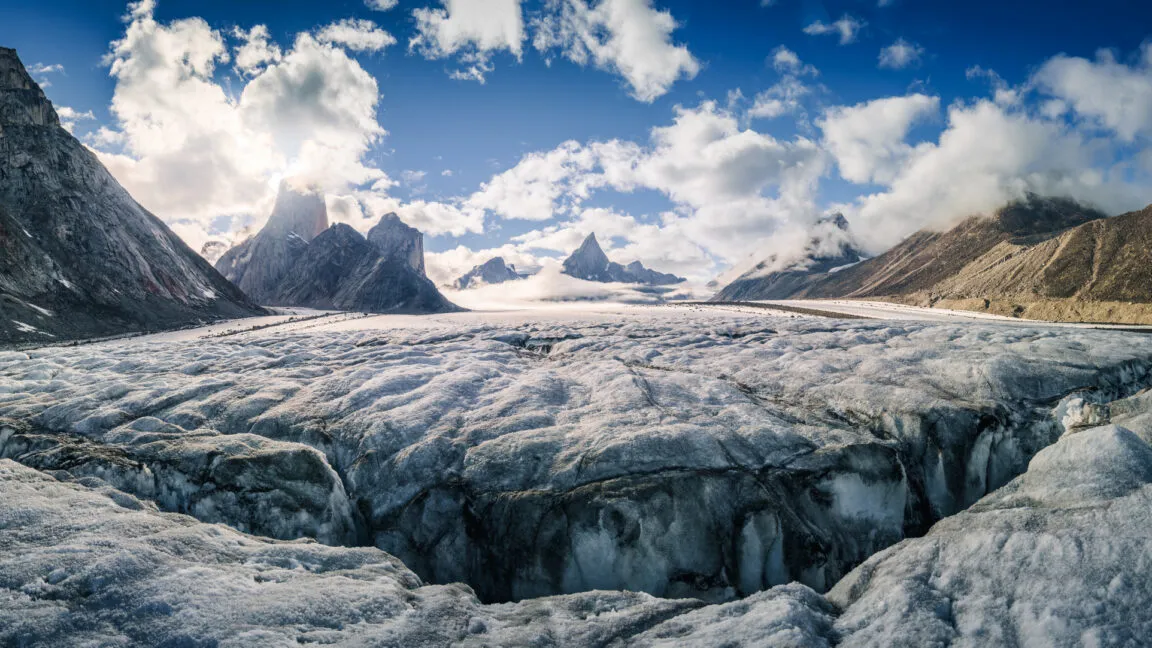
The research, published in the journal Science, relies on the unique properties of the Barnes Ice Cap. Unlike most glaciers, which are 'warm-based' and slide across the landscape—erasing geological history in the process—Barnes is a cold-based ice cap. It is frozen directly to the bedrock, acting much like ice plastered to a car windshield. This stability allows the ice to preserve the biological and geological records of the land beneath it rather than grinding them away.
The role of cold-based ice in preservation
Because the ice does not slide, it acts as a temporal capsule. When the Laurentide Ice Sheet retreated during the Holocene, it left behind bare ground that was eventually colonized by tundra plants and mosses. When the ice began its re-expansion, it effectively smothered these living organisms in place, preserving them in a frozen state for thousands of years. This unique mechanism provided the researchers with a chronological map of the ice's movement.
What dating methods revealed the timing of the ice advance?
Researchers utilized two independent scientific methods to reconstruct the timeline of the ice sheet's retreat and subsequent growth. By combining isotope analysis with radiocarbon dating, the team could pinpoint exactly when the ice margin moved across the Baffin Island plateau.
The first method involved measuring beryllium-10, an isotope that accumulates on rock surfaces exposed to the sky. By analyzing the concentration of this isotope on boulders, the team determined that the Laurentide had retreated to its current margins by roughly 3,600 years ago, likely reaching its smallest extent around 3,000 years ago. The second method focused on 'kill dates' found in organic matter. As the ice margin advanced, it killed the mosses and plants in its path. By radiocarbon dating these dead plant remnants, the team could identify the specific moment the ice arrived at various locations.
The results showed a significant cluster of dates around 1800 CE, coinciding with the Little Ice Age. However, the researchers argue that the Little Ice Age was merely a late pulse of a much larger, 2,000-year-long expansion process that had begun long before the industrial era.
Why did the ice sheets begin to expand 2,000 years ago?
The re-expansion of the ice was driven by a geological 'tug-of-war' between declining solar energy and rising atmospheric carbon dioxide. For millennia, two opposing forces influenced the Earth's temperature, but the cooling effect eventually gained the upper hand.
According to the study, solar energy reaching the high northern latitudes peaked between 10,000 and 11,000 years ago and has been in steady decline ever since. This decline pushed the planet toward a natural glacial inception. Simultaneously, atmospheric CO2 levels were slowly increasing, rising by approximately 20 parts per million between 8,000 and 2,000 years ago. While this greenhouse effect provided some warming, the drop in solar insolation was more powerful. Eventually, 2,000 years ago, the cooling from reduced sunlight overwhelmed the warming from CO2, triggering the ice sheet's regrowth.
Reconciling models with field evidence
This finding initially seems to contradict climate models that suggest the next ice age had been postponed by tens of thousands of years due to orbital forcings and CO2 interference. However, lead author Nicolás Young, a geologist at Columbia University’s Lamont-Doherty Earth Observatory, suggests there is no contradiction. The discrepancy lies in how 'glacial inception' is defined. While models look for the moment ice sheets become massive enough to trigger a full ice age, the field evidence captures the much earlier, subtle moment when an ice sheet first turns around and begins its outward growth.
How did human activity halt the glacial cycle?
The natural progression toward a new ice age was interrupted by the rapid rise of greenhouse gas emissions following the Industrial Revolution. While the ice was expanding, human-driven CO2 levels began to climb at a rate unprecedented in the geological record, eventually overwhelming the natural cooling cycle.
The timeline of this interference is stark. Carbon dioxide levels rose by approximately 12 ppm between 1750 and 1850, followed by an additional 50 ppm by 1960. Since then, levels have surged further, increasing by 138 ppm by 2024. This massive influx of CO2 changed the atmospheric chemistry so significantly that by 1960, the mass balance of the Barnes Ice Cap turned negative, ending its long-term advance.
What is the current status of the Barnes Ice Cap?
The Barnes Ice Cap is currently in a state of rapid decline and is expected to disappear within a few centuries. The warming climate has eliminated the vital 'accumulation zone' necessary for the glacier's survival.
The loss of ice mass is evident in the changing landscape of the cap. In the 1960s and 1970s, roughly 35 percent of the cap's surface was located above the local snow line. By the early 2000s, that figure had plummeted to just 3 percent. Today, no part of the cap remains above the snow line, meaning that in the summer months, the ice undergoes total melting without any new ice forming to replace it. Under any plausible emissions scenario, the researchers conclude that the cap will not survive the coming centuries.
Frequently asked questions
What is the significance of the Barnes Ice Cap?
The Barnes Ice Cap serves as a critical geological archive because it is 'cold-based.' Because it is frozen to the bedrock, it preserves the plants and rocks beneath it, allowing scientists to accurately date when the ice moved across the landscape.
When did the Laurentide Ice Sheet start growing again?
Evidence suggests the ice sheet began its re-expansion approximately 2,000 years ago. This movement was part of a long-term trend toward a new glaciation that was eventually halted by modern human-induced climate change around 1960.
What is a 'kill date' in glaciology?
A 'kill date' refers to the specific moment an advancing ice margin covers and kills vegetation. By radiocarbon dating the organic matter that was smothered by the ice, scientists can map exactly when the glacier moved through a specific area.
Why is the ice cap melting so quickly now?
The ice cap is melting because it has lost its accumulation zone. Due to rising temperatures, the entire surface of the cap now sits below the snow line, meaning summer melting occurs without any new snow accumulating to replenish the ice.
Did human activity prevent a new ice age?
While human-caused warming did reverse the natural trend toward a new ice age, researchers note that this occurred through a rapid and unprecedented increase in greenhouse gases that has fundamentally altered the planet's natural geological cycles.
Key takeaways
- The Laurentide Ice Sheet began a natural re-expansion approximately 2,000 years ago.
- Cold-based ice on Baffin Island preserved ancient plants, providing a timeline for glacial growth.
- A decline in solar energy was the primary driver for the ice sheet's expansion.
- Human-driven CO2 increases reversed the glacial trend by approximately 1960.
- The Barnes Ice Cap is projected to disappear within a few centuries due to melting.
Conclusion
The discovery that the Laurentide Ice Sheet was on a path toward a new glaciation provides a profound perspective on the scale of human impact on Earth's climate. For two millennia, the natural cooling driven by declining solar radiation was winning the tug-of-war against rising CO2. However, the industrial era introduced a level of atmospheric change so rapid that it effectively canceled a geological cycle. As the Barnes Ice Cap continues to shrink and lose its ability to accumulate new ice, it stands as a visible reminder of how human activity has diverted the planet's natural evolutionary trajectory.