Why has Starlink Ukraine reliance become a strategic risk?
Starlink Ukraine reliance has transitioned from a vital asset to a significant operational liability due to the unpredictable nature of its availability. While the network provides high-speed internet and data streams essential for both civilian and military use, the service is subject to the decisions of SpaceX and its owner, Elon Musk. The reliability of the service has been compromised by political inclinations and sudden technical restrictions that have directly impacted frontline capabilities.
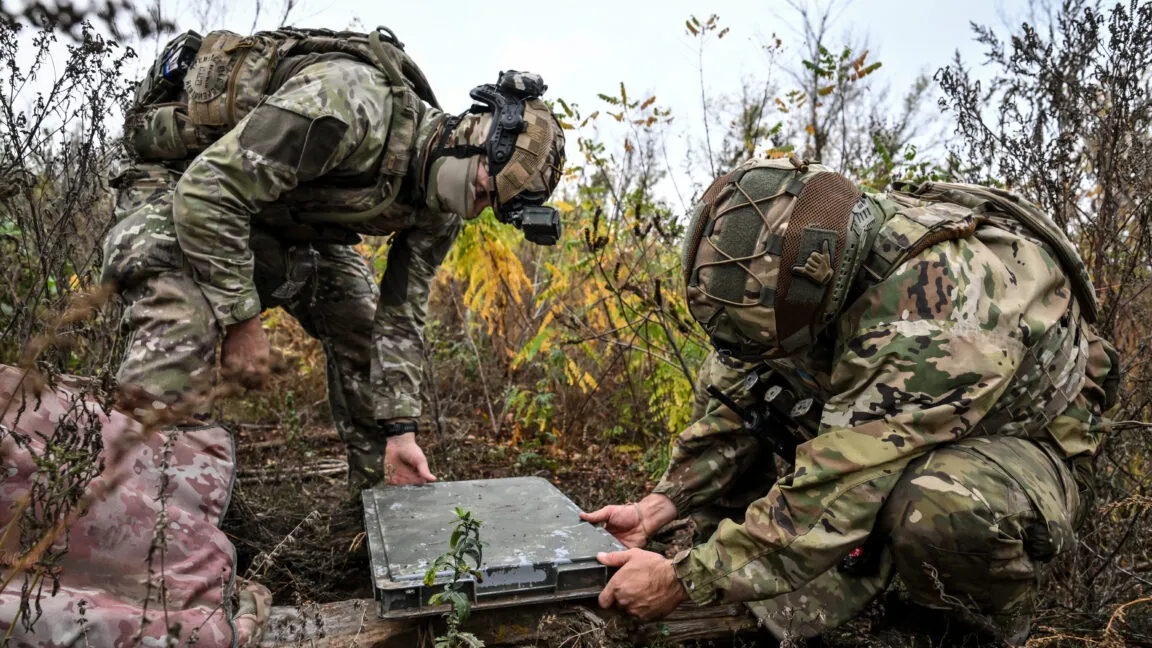
The primary strength of Starlink lies in its combination of cost, availability, and ease of use, making it a near-monopoly in the satellite communications sector for rapid deployment. However, this dominance creates a single point of failure. For the Ukrainian military, which uses these terminals to remotely control drones and provide guidance for air defense, any disruption in connectivity can lead to the loss of expensive equipment or the failure of critical missions.
The impact of service throttling
In October 2026, Ukrainian officials reported that SpaceX imposed speed limits on terminals moving at speeds exceeding 160 kilometers per hour (99 mph). This throttling caused instability even at lower speeds, such as 130 kilometers per hour (80 mph), according to Michael Kofman of the Carnegie Endowment for International Peace. Such disruptions occurred without warning, often during nighttime operations, affecting reconnaissance, supply missions, and strike capabilities.
How does Starshield differ from commercial Starlink service?
Starshield represents the military-grade evolution of the Starlink network, offering the high-speed connectivity required for advanced combat applications. While commercial terminals provided by the US, Poland, and Germany are largely suited for stationary installations, Starshield is designed to support highly mobile and data-intensive hardware.
According to a former Ukrainian defense ministry adviser, Starshield provides the necessary bandwidth for complex operations that standard commercial service cannot sustain. This has enabled the deployment of terminals on various platforms, including:
- Unmanned Ground Vehicles (UGVs): Providing remote command and control for ground robots.
- Maritime Drones: Supporting autonomous or remote-controlled boats in the Black Sea.
- Aerial Drones: Facilitating high-speed data links for reconnaissance and strike drones.
Despite these advantages, the reliance on Starshield has not shielded Ukraine from the recent policy-driven service disruptions that targeted high-speed military applications.
What are the consequences of Starlink service disruptions on the battlefield?
Service disruptions have had immediate and tangible effects on Ukraine's ability to defend its airspace and conduct offensive operations. The most severe impact was felt during the recent period of throttling, which coincided with intensified Russian missile and drone attacks against Ukrainian infrastructure, including power grids and residential areas.
Ukrainian President Volodymyr Zelenskyy noted that the restrictions interfered with air defense systems that utilize fast-moving drone interceptors. When these interceptors cannot maintain a stable link to their operators due to speed-based throttling, the effectiveness of the national air defense umbrella is diminished. Furthermore, the disruptions affected:
- Frontline Supply: Drones used to transport essential goods to combat units.
- Reconnaissance: The ability to monitor Russian troop movements in real-time.
- Strike Missions: Precision attacks on Russian supply lines in occupied territories.
The service was only fully restored to military-grade standards on October 24, 2026, following intense political pressure from European leaders and bipartisan calls for congressional oversight in the United States.
How is Ukraine diversifying its drone and communication technology?
Ukraine is actively implementing a strategy of technological redundancy to ensure that its military operations are not crippled by the loss of a single satellite provider. Defense companies are increasingly designing systems that can function independently of Starlink or utilize alternative communication methods.
BlueBird Tech, a Ukrainian defense company, has stated that they do not manufacture systems that are critically dependent on Starlink. While they integrate Starlink terminals into some products, it represents only a small fraction of their total output. This diversification is a response to both political uncertainty and the technical reality of electronic warfare on the battlefield.
Alternative communication methods and hardware
To combat the dual threats of satellite service withdrawal and Russian electronic warfare, Ukrainian engineers are deploying several alternative solutions:
- Fiber-Optic Drones: Systems like the Zhakh FPV drone use long, unspooling fiber-optic cables to maintain a physical communication link with the operator, making them immune to both satellite throttling and radio-frequency jamming.
- Multi-Link Systems: Integrating multiple types of communication hardware so that if one link (like Starlink) fails, the drone can switch to another frequency or network.
- Localized Jamming Resistance: Developing hardware capable of operating in "zones of disruption" created by Russian jamming systems.
This shift toward autonomy is essential as Russian forces continue to deploy sophisticated jamming equipment to create dead zones in occupied territories, further complicating the reliance on satellite-based telemetry.
Frequently asked questions
What caused the Starlink service disruptions in October 2026?
The disruptions were caused by SpaceX imposing speed limits on terminals moving faster than 160 kilometers per hour. This throttling was reportedly ordered by Elon Musk and potentially conducted in consultation with the Trump administration, though both parties have denied direct responsibility for the specific restrictions.
Can Russia use Starlink terminals?
Yes, Russian military units have been known to use smuggled Starlink terminals for their own operations. However, in February 2026, SpaceX implemented a whitelist system, shutting off access to any terminals within Ukraine that were not officially authorized, which significantly disrupted Russian battlefield communications.
What is the difference between Starlink and Starshield?
Starlink is a commercial satellite service designed for high-speed internet access for general users and stationary installations. Starshield is a specialized, military-grade version of the service that provides the higher speeds and connectivity stability required for drones, maritime robots, and other combat applications.
How does Ukraine protect its drones from jamming?
Ukraine uses several methods to counter jamming, including the use of fiber-optic cables for FPV drones, which provides a physical connection that cannot be electronically jammed. Additionally, defense companies are designing hardware to be less dependent on any single satellite network.
Why did the Starlink restrictions end?
The restrictions were lifted following significant political pressure. This included bipartisan calls for US congressional oversight of SpaceX's satellite monopoly, criticism from European leaders, and a direct request from Donald Trump to Elon Musk to restore the service.
Key takeaways
- Ukraine is diversifying drone technology to reduce strategic dependence on Starlink.
- Starshield provides high-speed military connectivity but remains subject to policy changes.
- Recent service throttling targeted high-speed terminals, impacting air defense and strikes.
- Fiber-optic drones are being used to bypass electronic jamming and satellite issues.
- Political interference has turned a vital communication tool into a battlefield risk.
The future of satellite-dependent warfare
The recent events surrounding Starlink highlight a fundamental shift in modern warfare: the intersection of private technology monopolies and national security. While satellite constellations provide unprecedented battlefield awareness, the ability of a single individual or corporation to influence a conflict through service availability introduces a new layer of vulnerability. Ukraine's move toward technological autonomy—using fiber optics, multi-link systems, and diverse hardware—is not merely a technical necessity but a strategic imperative. As electronic warfare and political maneuvering continue to evolve, the ability to operate effectively without a single, dominant provider will likely define the next generation of resilient military technology.